THE TREE LINE
  • Just Warming Up
  • Here and Beyond
  • Journey Out of Darkness
  • Monadnock Blog
  • Dachau and Climate Change
  • Generation Chasm

Just Warming Up

Thoughts on Life in the Anthropocene

Electrification on the Menu

6/2/2021

22 Comments

 
PictureRice heating on new electric stove. Gas, get over it.
Our old gas stove, here when we bought our old house, had become a clunker. She was dirty, stained beyond cleaning. The oven heated unevenly and leaked carbon monoxide to unhealthy levels, 18 ppm, when activated. The cooktop flames worked fine, but were powered by a fossil fuel, natural gas, that contributes to climate change. And, regrettably, more than once we'd left a nearly invisible flame burning after dinner was done.

So recently we said sayonara, baby to Old Bessie and bought a new stove, an electric from LG, which will be powered sustainably by the solar rig on our roof. Unlike the electric models of yesteryear with glowing coils for burners, upon which our moms unceremoniously slammed down their ten-ton iron pressure cookers, this one has a flat, glass stovetop with heating elements beneath. The oven features a newfangled convection option, superior for baking.

Yes, I  know, gas flames are easy to modulate on a stovetop, but it's hasn't been hard to figure out -- relearn, really, as I grew up with an electric stove -- how to boil water and sauté veggies with electricity. It's nice, too, that the controls, some digital and some good-old-fashioned knobs, are all up front. Hence, there's no need to reach across hot pans to make oven adjustments.

She's pretty stylish, don't you think, in a brushed-steel kind of way.    

PictureNot imported from China
Now, you may be wondering: what energy source does America use to cook its flapjacks? I figured it was mostly natural gas these days, but DailyEnergyInsider asserts that almost two-thirds of households get cooking with electricity.  In the Northeast, about half of households contain electric stoves. As of 2019, only one percent of stoves in the U.S. feature the latest cooking innovation, the induction stovetop (powered by electricity). That's because, perhaps, most people can't bring themselves to fry up their bacon with electromagnetism. Let the microwave do that weird-science thing behind its closed door.

Regardless, that's still tens of millions of polluting gas stoves that gotta go. Without rapid electrification of stoves and other major household appliances -- clothes dryers, water heaters, outdoor grills -- it's hard to imagine the U.S. achieving the ambitious climate-change goals proposed by the Biden Administration.  

​Time was, of course, when stoves were powered by firewood. Last month my wife and I took a trip to southern Vermont and made our way to Hildene, the mansion built in 1905 by Abe Lincoln's only child to live into adulthood, Robert Todd Lincoln. As president of the Pullman Car Company, at one point the largest manufacturer in the world, Lincoln could afford the most "modern" appliances. Everything's relative, I suppose, but it must have been tricky regulating temperatures in the wood-fired behemoth that dominated his butler's pantry. Once you stoked that baby with a couple of split hickory logs, there was no going back.

​Burnt flapjacks, anyone?   

22 Comments

Fifteen Days After Earth Day

5/7/2021

0 Comments

 
PictureSmokestacks of the Mystic Generating Station
The Eversource crew is still digging up the street in front of our house, laying new pipes for natural gas, and I can't help wondering where our gas comes from. The earth, yes, but more precisely where does the fossil fuel flowing to our furnace originate on a map and how does it get from there to here? So I did some research online and learned a few things about the complicated regulatory and economic superstructure undergirding said energy supply. When I related this information to my smart and sometimes patient wife -- interrupting her loving examination of the daffodils against the back fence, their yellow-smudged faces smiling -- her eyes glazed over and her smile grew as frozen as an ice-cave stalagmite. Perhaps I shouldn't have led with an explanation of FERC (the Federal Energy Regulatory Commission). 

It's kinda boring, the nitty-gritty of the energy business. Not to mention opaque, complicated and jargon-laden. Within this fog, however, hides a great deal of corruption, negligence and greed. (Wall Street is much the same, its machinations almost beyond fathoming. Even the Masters of the Universe aren't exactly sure how they're screwing the rest of us.) So maybe I can cut the fog with an epic-poetic tone, something like, "Read on my children and behold what lurks/Within the midnight consolidation approved by FERC." Or maybe a more literary start, ala Gabriel Garcia Marquez: "Many years later, as he kayaked down his street flooded by the melting of Greenland, Colonel Harold Francis LaCroix III was to remember that distant afternoon when the Internet helped him discover FERC." Hmmm, maybe not. Instead, I'll just tease with seaweed. We'll go backward from smelly seaweed on Caribbean beaches to the pipes on my street.

PictureSargassum seaweed on the coast of Tobago
In recent decades, Sargassum seaweed has increasingly marred the once-pristine beaches of the Mexican Caribbean. There are numerous reasons for the seaweed's proliferation in this region, chief among them extreme winds and higher ocean temperatures caused by climate change. Websites such as this one help the wealthy locate beaches untrammeled by the noxious interloper.  Oh, the poor dears, such a bother! I almost don't want to add that their unstainable overconsumption greatly contributes to the changing  climate producing the odiferous brown mats of macroalgae that foul up their hyper-expensive, luxury-hut experiences. In fact, the rich and their irresponsible behavior are one of the biggest problems when it comes to climate change, but that's another blog for another time.

Some of the worst outbreaks of Sargassum seaweed now strangle elite enclaves such as Antigua and Barbuda, as well as upper-middle class vacation spots on Tabago. As in Trinidad and Tobago, a small nation that hosts tourists, the world's largest population of nesting leatherback turtles, and gargantuan tankers toting liquified national gas out of Port Fortin on the southwest corner of the island of Trinidad, a stone's throw by a mountain troll from Venezuela. For about 25 years, 3-4 billion cubic feet of natural gas have been extracted daily from the offshore Cannonball field and then liquified at the massive facility in Port Fortin, run by a conglomerate called Atlantic LNG. That entity is owned mostly by BP and Shell, with smaller shares held by T/T's state-controlled gas company and a Chinese sovereign wealth fund. Atlantic LNG employs 500 people, plus 1,000 contractors from around the world. 

Some LNG gas tankers leave the island for Europe or Asia, but many cruise north to Boston. For reasons that I haven't discovered yet, Boston is the only U.S. city that primarily relies on imported natural gas rather than on the glut of cheap gas found in the fracking fields of Texas, Pennsylvania and other states. I'm sure it's a totally innocent reason without a hint of impropriety. At any rate, the tankers out of Trinidad and Tabago barge into Boston Harbor and unload their booty at the Marine Terminal in Everett. From here, natural gas is piped to homes, such as mine, and to the Mystic Generating Station next door. There it's burnt, the emissions are sent up smokestacks, and electricity results. The terminal and the power plant are both owned by an energy conglomerate, Exelon. 

PictureExelon CEO Chris Crane
In case you're wondering, the CEO of Exelon does not live in Everett, a low-income town (45 percent Hispanic and African American) with terrible air quality largely due to the job-providing, climate-destroying energy facilities within its boundaries. It turns out that Exelon CEO Chris Crane studied at New Hampshire Technical College just north of here, but then, alas, ruined it by getting some kind of advanced executive degree at Harvard Business School. My wife says that he looks like Jenifer Garner's father in the TV show Alias. Nice pink tie, Chris. Mr. Sensitive, ready to opine about Exelon's commitment to environmental justice.  
  

Okay, enough snark. Here comes the "interesting" part. The Mystic Generating Station is in the process of closing down. At the end of May, 2021, two of the plant's four generating units will cease operation. One of these is a highly polluting petroleum-fueled "peaking unit" used during periods of high demand. The remaining two units are slated to shutter by May 31, 2024. A few years ago, actually, Exelon viewed the entire Mystic facility as a losing venture and wanted it fully closed by 2021. Not so fast, replied IS-New England, the regional power transmission organization. First we have to choose a proposal that will replace the electricity that goes missing with your closure. The winning proposal, and cheapest, was the $49 million "Ready Path" plan from National Grid and Eversource, designed to improve the efficiency of substations and transmissions lines. This development annoyed Exelon, who now wanted to keep the entire plant open and have taxpayers subsidize the operation, so they issued a complaint to FERC. And last summer good old FERC said nix to Exelon. No backsies, you're done.

PictureThe one and only
Was that so awful? Eye-glazing? Anyway, it's a semi-happy ending. Soon, but not soon enough, the belching power plant will go quiet and the toxic air in Everett and beyond will become a little cleaner. Greenhouse gases will stop rising from the Mystic site. The fate of the Marine Terminal is unclear, but in the meantime LNG tankers will continue to travel from Trinidad to Boston, filling our pipes, warming our homes in winter. Also, world temperatures will keep rising, Greenland will keep melting, and rich folk will forever troll for beaches without seaweed. What really sticks in my craw, however, is that bit about the electricity from the Mystic Generating Station being replaced with an upgrade to substations and transmission lines. Great, but why the hell didn't National Grid and Eversource do that years ago, rather than burning more fossil fuels? Why did it take this confusing, time-consuming process with ISO-NE and FERC?

The answer is obvious. Ultimately, fossil-fuel burners burn fossil fuels for profit. That's what they do. Until, that is, we as in WE THE PEOPLE make it too expensive or ban it outright. 

0 Comments

The Day After Earth Day

4/23/2021

0 Comments

 
PictureClockwise from porch: evil Jetta, Eversource truck, emerging rhubarb patch, yellow lines marking gas pipes.
Yesterday, on Earth Day, the Biden Administration announced very ambitious and perhaps unreachable goals for the U.S. to cut its greenhouse gas emissions by 50-52 percent (from 2005 levels) by the end of this decade, goals that will require vast restructuring of key sectors of our economy responsible for fueling climate change and polluting the biosphere. This morning, on the day after Earth Day, I chatted from my porch with a worker for the local natural gas provider, Eversource, as his crew prepared to dig up the street in front of our house.  

Orange cones wrapped with No Parking signs dotted the sidewalk, but one car, a gunmetal-grey Jetta, remained in violation. Did I know, asked the middle-aged worker in a beautifully lilting Irish accent, whose car this might be? No, said my wife Elahna, hurrying to the electric vehicle in our driveway, late for another day of nephrological ruminations at the hospital. Go ahead and tow it, I added, ungenerously. I will, said Irish, but I'd rather not. Over my right shoulder, off the side of the porch, flew a flag with a spreading sugar maple -- for Arbor Day, actually, but close enough. I'd forgotten to take it down last night. 

The Jetta, by the way, is one of the cars involved in Volkswagen's illegal scheme to hide from detection their vehicles' very high (up to 40 times federal limits) emissions of NOx, which contributes to smog and acid rain. The $2 billion penalty they paid funded the charging network Electrify America, which we've used many times during road trips in our beloved BMW i3, produced at the world's most sustainable car factory in Leipzig. So that's another bad German/good German tale. 

You're replacing pipes? I asked. Yes, Irish replied, they're a wee bit leaky. How old? Over a hundred years, he said, adding that we'll all be dead by the time they have to be replaced again. This macabre utterance seemed almost poetic when delivered with his Gaelic flavor. I couldn't agree, however. No, those are the last gas pipes that'll ever be laid here, everything's going electric. As if on cue, Elahna backed our EV onto the street and whooshed away, silent as an empty pint glass. The tree flag flappity-flapped and somewhere Al Gore was smiling. Or having indigestion.   

The worker and I continued chatting about EV mileage and charging station availability. What's your electric bill? he asked. I pointed at the solar panels on our roof and made a zero sign with my thumb and forefinger. Meanwhile, the owner of the evil Jetta ran out to move her car. Minutes later, a pavement-cutting machine inched up the road, belching fumes, and I retreated into the house. It's warmed by natural gas on this chilly April morn. We're thinking about switching to an electric heat pump, but haven't gotten around to it yet. So I guess we're no carbon angels, either. 
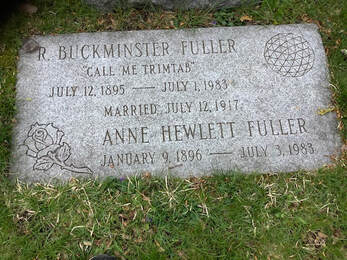
PictureTrimtab: a tiny rudder attached to a big rudder on a boat.
Yesterday, in honor of Earth Day, I visited the grave of eco-architect and visionary Buckminster Fuller at nearby Mount Auburn Cemetery. Best known for popularizing the geodesic dome, Fuller and his wife Anne Hewlett Fuller are buried together in the family plot, not far from an enormous sugar maple. They died two days apart in July, 1983, and on the gravestone is etched a geodesic design for Bucky and a rose, with thorn, for Anne. He died of a heart attack while visiting his comatose wife's bedside.  Maybe Elahna and I will pull a similar trick in 2075 or so -- that is, assuming we're not living underwater or in your basic apocalyptic hellscape -- and on our stone they'll etch a kidney for her and, well, I'm not sure what might represent me best. I'm eclectic, you see. A curious generalist. Semi-employed. Fortunately, there's still time to work on that icon business. 

​Around the Internet, Buckminster Fuller is given credit for coining the phrase "Spaceship Earth." That honor might also go to development economist Barbara Ward or UN Ambassador Adlai Stevenson. Or to Henry George, who referred to the Earth as a ship that sails through space in his 1879 book Progress and Poverty. Fuller did cleverly remark that Spaceship Earth came without an instruction manual, and then he wrote a book called Operating Manual for Spaceship Earth. 
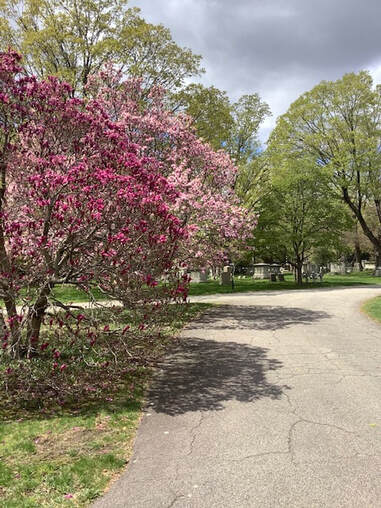
PictureMount Auburn Cemetery in spring
At first glance, it's an appealing metaphor: Earth as spaceship and its human denizens as a "harmonious crew working toward the greater good." That's the Spaceship Earth worldview, according to Wikipedia. Gets you right there, doesn't it? So let's hug it out and then reduce greenhouse gas emissions 50-52 percent over the next nine years! 

But on second glance, Spaceship Earth should perhaps stay in the 1960s with bell bottoms, F Troop and Tang (the breakfast drink of Mercury astronaut John Glenn and NASA fanboy Hal LaCroix). After all, Earth is a spaceship that isn’t going anywhere. Around and around the sun it orbits, plodding along at 66,616 mph, tracing the same sad ellipse over and over again. Granted, the solar system is revolving around the black hole at the center of the galaxy and the galaxy is galloping about and the universe is expanding to God knows where, but all that drifting around doesn't exactly add up to a mission.

Spaceships need missions. To explore this planet or that star. To bring astronauts from this rock to that rock. To discover life outside our sphere. If we are Earthonauts, according to the Spaceship Earth metaphor, what's our mission except to survive the ride until we die? Yes, for a long time, we explored the frontiers of this planet, but that's pretty much done now. So are we throwing a big party now, with endless streams of entertainment, fizzy drinks and crunchy snacks? Are we trying to consume as much as possible -- physical goods, fake and real news, experiences both peak and mundane? Parents strive to make a "better life" for their children, but what does that mean in the Anthropocentric Era of looming climate-change disaster? For all our shiny gadgets, it often seems we're path dependent, stuck, replacing old gas pipes with new gas pipes as the generations roll by. 

Without a shared mission -- one of high, unifying purpose -- it's hard to imagine the human species mustering the cooperative spirit to fully combat climate change, no less accomplish the first, difficult step of reducing our emissions halfway. 
Maybe, to find that purpose, we should consider Earth not as a spaceship, but as a home. Planet Home. Earth-Home. Home, Home on the Milky Way. Most people feel strongly about their homes, especially if they believe they're in peril. Many people are even willing to make sacrifices just to keep their homes beautiful. 

0 Comments

Connecting Dachau and Climate Change

9/15/2020

1 Comment

 
Picture
A year ago I walked onto the grounds of Dachau. It was my first visit to Germany and my first visit to a Nazi death camp. Soon after, I read Joshua M. Greene's brilliant Justice at Dachau, about the trial of Nazi war criminals held on the grounds of the Dachau camp in 1945-47. It's a fascinating story about a dignified man, William Denson, who sacrificed his health and nearly his sanity in leading the American prosecution team.

Denson employed a legal strategy called Common Design, which held that individuals who work within a destructive organization can be found guilty by virtue of displaying a shared, conscious intent to lend their services to that enterprise. I soon found myself wondering if Common Design could be applied to our present conundrum with climate change, in which millions of people work for enterprises that produce or emit large volumes of greenhouse gases. Many millions also engage in activities that enable our addictive dependence on fossil fuels.

Mankind's inability to boldly address the accelerating calamity of climate change starts, I think, with our inability to take responsibility for it. Might Common Design be useful here? 

Nazi analogies are perilous, too easy to hurl about in these partisan times. But it's just as dangerous to assert that we no longer have anything to learn from the Nazi era. There are lessons from the great struggle with Nazism that still apply today. It's perfectly reasonable to argue that the legal strategy employed to prosecute men and women who carried out the Holocaust may also be effective for affixing responsibility, if just psychologically, for another disastrous event: climate change. If you're open to that possibility, please read my essay. 
1 Comment

Hollywood and Climate Change

8/18/2020

1 Comment

 
PictureHarrison Ford as Indiana Jones
See any good stories about climate change on TV? 
​
Probably not. And that’s too bad, because there’s nothing like a well-executed story to motivate people to care about an issue. You know the old saying: facts tell, but stories sell. Numbers numb and stats sedate, but a rip-roaring tale makes the heart dilate.

Sure, you can find some strong documentaries, such as Al Gore’s Oscar-winning An Inconvenient Truth (2006) and the acclaimed series Years of Living Dangerously (2014-2016) that featured celebrities learning about global warming and its impacts. I mostly recall Harrison Ford looking ready to horsewhip an Indonesian bureaucrat complicit in burning rainforests. A planned BBC documentary about climate activist Greta Thunberg sounds promising.

PictureYour Basic, Very Big Ice Shelf
On TV news, it’s all coronavirus all the time. Plus the collapsing economy, protests against racism and police brutality, the election…so when the Siberian town of Verkhoyansk hit 100 degrees Fahrenheit on June 20th, turning local permafrost to goo and causing a massive burp of climate -altering methane, there was scant mention on the major news channels – CBS CNN, MSNBC, FOX News – or the nightly broadcasts on ABC, NBC and CBS. Yeah, PBS covered the story, but who watches that who needs convincing?
​
At the end of July, when the Milne Ice Shelf in the Canadian Arctic collapsed, dropping into the drink an ice-shelf-cube with an area greater than the island of Manhattan, well, it barely made a news splash. Crickets. 

TV dramas? Nothing much. The 2019 British satire about the 2020s, Years and Years, includes a sub-plot about climate-change induced flooding, mixed in with a nuclear strike, banking crisis and monkey flu pandemic. HBO Max announced in 2020, before Covid-19 leaped oceans, their commitment to making a series of fictional stories based on David Wallace-Wells’ non-fiction bestseller The Uninhabitable Earth. Fingers crossed; not holding my breath.

PictureGeostorm: Tech Will Save Us
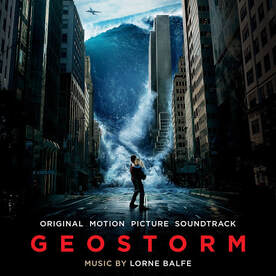
Okay, how about the movies? With theaters shuttered due to Covid-19, it’s not “what’s playing?” but “what do we want to play?” Endless streaming choices, alas, offer little for anyone willing to try a dramatization of climate change in a fictional context. There’s always The Day After Tomorrow (2004), which is about how rising temperatures cause the world to…freeze over? Not likely. In the blustery Geostorm (2017), smart guys build a network of weather-manipulating satellites to defeat climate change in the first ten minutes, and then the action starts.  
    
According to David Wallace-Wells, mainstream films and TV shows have so far failed to take on climate change directly. Instead we get a smattering of “stories that distract even as they appear to engage,” that “deliver sublimation and diversion.” Post-apocalyptic films like Interstellar, Snowpiercer and Mad Max: Fury Road, set in future hellscapes created at least in part by climate change, skip over the slow-motion, intermediate agony.  

Wallace-Wells also notes that the window for mass viewer engagement could close within a few decades. Right now, he states, there’s a potential audience for stories about climate when it’s still “a marginal feature of human life, or an overwhelming feature of lives marginal to your own. But at three degrees [Celsius] of warming, or four, hardly anyone will be able to feel insulated from its impact – or want to watch it onscreen as they watch it out their windows.” By then, climate change may “cease to be a story and become, instead, an all-encompassing setting.”

PictureForgiveness, Actually, Isn't Easy
Rather than just complain about the mutating entertainment colossus known as Hollywood, I’ve written a TV pilot, Forgiveness, depicting a fractured United States of the 2040s that’s both severely impacted by climate change and still recognizable. It places young and middle-aged viewers in a pretty crappy but not apocalyptic future that could occur, according to accepted scientific models, within their lifetimes. And it allows older viewers to experience the degraded world that their adorable grandchildren and great-grandchildren may be forced to negotiate.

Those kids, of course, grow up and take stock. Some blame their elders and reach for revenge, some fall into cynicism or despair. Many retreat into fantasy realms, dream of long-shot techno-solutions, or build utopian communities away from regions worst-hit by climate change. However a small number of young people -- including my story’s main character, an epically stubborn female scientist -- search for a meaningful way to forgive the generations before them who saw the calamity coming and did little or nothing to prevent it.

I’m still working on the script. It needs more oomph and action to attract serious attention, I suspect. So, oomph and action, coming up.    

1 Comment

Not Okay Boomer

2/7/2020

1 Comment

 
Picture
Riding on the T yesterday, encased underground in a subway car somewhere between Park Street and Kenmore Square, I noticed a young man slouched in his seat wearing an OK Boomer t-shirt. (I almost inserted "(oxymoron?)" after "young man slouched" in the previous sentence, but that would be such a condescending, anti-Gen Z and Boomerish thing to do; so I didn't.) This sight prompted my fuddy-duddy brain to recall something I read about the OK Boomer internet meme; voila, I soon found the article in the oh-so-woke New York Times and wove it into a lesson for my communication students. And now I'm either a cool, hip professor or pathetic for trying too hard.

So, according to Wikipedia: as of December 2019, videos tagged with #OkBoomer on TikTok had been viewed nearly two billion times. That's probably closer to one person watching video two billion times than to two billion people watching video once, but the upshot is that OK Boomer -- a dismissive remark zinged at Baby Boomers who express outdated, narrow-minded viewpoints regarding issues such as income equality, climate change and transgender rights -- has spread widely among hyper-connected youth. That is to say, youth. 

​Some people are laughing the whole thing off; others are appalled, offended! The novelist Francine Prost says the phrase signals a pop-culture embrace of discrimination against older folks. She's right, of course, but that's not what I want to focus on here. 

This is my beef. Non-boomers, maybe you're right about most of this stuff -- certainly we Boomers have left you a terrible mess with climate change -- but you can't just toss off a flip, dismissive remark and walk away. That's rude and ineffective. No, stand your ground. Say Not Okay Boomer and make your argument. Make it over and over again if necessary. Be articulate, be persuasive. Have the fortitude and courage to engage. Then listen to your elders even if it kills you. Give ground occasionally. Work for solidarity and common understanding. Why, you ask, should we bother? Because you need us, like it or not. Especially with attacking climate change -- time is running out and it'll be far too late by the time all the Boomers die or stop voting, whichever comes first. 

But please, don't retreat into your insular TikTok world to sulk and spew disdain at the people in power, at the ones with the money. That's not going to work. That's entitled, that's lazy and that's almost worthy of the retort designed to malign younger generations: snowflake. I've heard some in Generation Z claim that they're just too tired and stressed out, too exhausted to bother explaining their views after previous rejections. Well, sorry. That's life. You gotta get up and try again. Do it better this time. Maybe you'll actually shift a mind or two. If you don't, well, you fought the good fight. Then go have a beer. Or avocado toast. Or a yoga session -- whatever.  

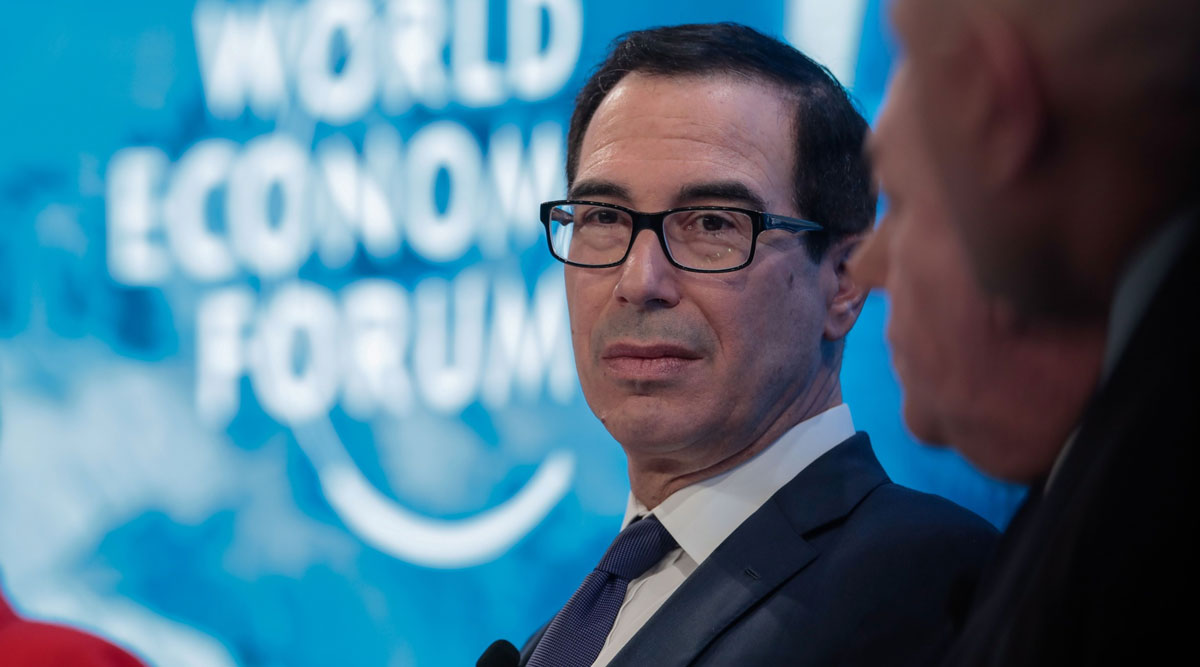
When one of the snidest and most destructive Boomers in our country, Treasury Secretary Steve Mnuchin, recently told teenage activist Greta Thunberg to take a college class in economics before daring to speak about climate change again, she didn't flip back with OK Boomer. She stood proudly on stage and in her tremulous voice spoke the truth -- to Boomers, Gen Z, Gen X, Silents, the Greatest Generation and Millenials.

To everyone, and with conviction.     
Picture
Steve Mnuchin -- Yale, class of 1985.
1 Comment

Impossibly Meh

2/3/2020

0 Comments

 
PictureHold the pickle, hold the lettuce...
Recently I stopped into a Burger King -- not your typical move for a vegetarian who didn't love fast food even in his carnivore days. But I'd heard good things about BK's Impossible Burger, a plant-based burger imposter, from this construction-worker guy in their TV commercial. Wow, tastes like the real thing, the actor exclaimed. I'd also recently devoured Jonathan Safran Foer's meditation on climate change, We are the Weather, which powerfully illuminates the massive role of animal agriculture. Chew on this tidbit: if cows were a country, they'd be third behind the U.S. and China in greenhouse gas emissions. So, can faux-meat products possibly save the day? And what the heck do they taste like?

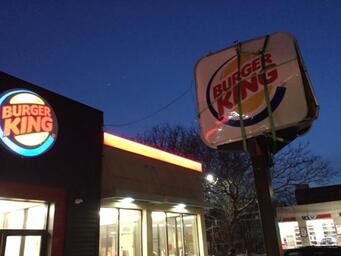
​In search of answers, and to "have it your way" at BK, I walked west on Commonwealth Avenue to the scrummy yet charming Brighton neighborhood of Boston. That the joint's sign appeared to be held together by giant bungee cords was not a reassuring start to the culinary adventure. 

The inside of the "restaurant" was haphazardly clean and painfully well-lit. I ponied up $5.99 for the Impossible Whopper and nobody rolled their eyes, silently accusing me of un-American Activities or a lack of manliness. (Life Alive, an excellent vegetarian place on the Boston University stretch of Commonwealth Avenue, serves mostly women -- 85 percent gals, according to my unscientific assessments. Dudes squat next door at Chipotle.) Then I sat at a counter, looking out at a parking lot and chain-link fence. Opened the bag, pulled out my prize. Unwrapped that. Used a napkin to scrape off the mayo-sludge, ragged onions and war-surplus lettuce. Dug in. 

Meh, it was okay -- no worse than my recollection of the meat-based Whopper. I mean, it seemed like a fast-food burger. Tasted like one, even looked like one. Semi-mealy mouth-feel, check. Dank taste, check. Heftiness in hand, check. Like I said, meh. So, not much of a test, was it? I suppose I should bring in a meat-eating friend and have her compare the dead-animal and plant-based Whoppers, rather than trying to conjure up distant memories of meat in my vegetarian-rewired brain. 

By the way, six bucks? That's a lot for an unsightly heap of bread and brown stuff, so I was glad to hear that Burger King has lowered the price of the Impossible Whopper. And sorry to hear that the reason was poor sales. Now the Imp-Whop is part of BK's legendary two-for-six-bucks menu, whatever that entails. Next time I gotta buy two? Please, no.

Nonetheless, plant-based burger scientists, keep on trying! The nation of Cow is one of the prime drivers of climate change, whether we care to admit it or not. ​     
0 Comments

Procrastination

1/24/2020

1 Comment

 
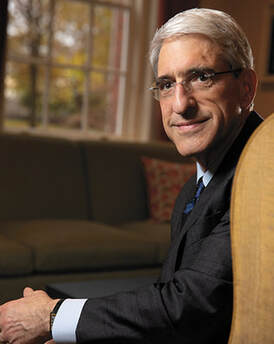
PictureYale President Peter Salovey
While lounging on the couch recently, my sore, surgically repaired arm cradled on pillows, I picked from the coffee table the most recent issue of the alumni magazine for Yale University. (My wife earned her undergraduate degree there, a few decades ago.) Whoa, the blazing orange cover almost burned my corneas as the scorching red headline announced: It's getting hot. Climate change, see inside.

​Yale, we learn, has pledged to go carbon neutral by 2050. At first blush, that sounds pretty good. Way to go, Yale, boldly determined to set a shining-green example for other incredibly wealthy and privileged institutions in just 30 years...wait a second, that's pathetic. Thirty freakin' years? Peter Salovey, the current president, will soon turn 62. At age 92, we presume, he'll be rolled on stage and feted by the Yalies of 2050 for his marvelous if deliberate plan to chip, chip, chip ever so slowly, let's not be hasty, at the existential crisis that supposedly is climate change. In the meantime, we'll always have this issue of Yale, featuring perfectly nice articles about climate change endeavors at the old alma mater. President Salovey, by all accounts a mensch,  contributes a back-slapping letter about the university's groundbreaking (with a teaspoon) efforts. Solar panels and composting! Compostable solar panels! As if anticipating objections, he's even employed a "task force" to explore the question of speeding up the process a wee bit.   

C'mon, Peter, you've got a $30.3 billion endowment! Some of the smartest people on the planet! I'm not going full Greta on you -- the amazing Ms. Thunberg this week told the assembled elites at Davos to stop the nonsense now, not by 2050, now -- but you can do better than this. Boston University, with its measly $2.2 billion endowment, has set its carbon-neutral sights on 2040. Just call up President Brown and he'll tell you how to do it by purchasing wind power in South Dakota.

So, for Yale, let's say 2030. That's within the university's epic grasp, don't you think? Oh, and check out this awesome poster that BU students put together. Your turn, bulldogs.       

Picture
1 Comment

Bitcoin, Greencoin, Carboncoin, Birdcoin

1/8/2020

0 Comments

 
PictureGeorge Orwell Would Not Approve
The previous post explored the ruinous environmental effects of the cryptocurrency called bitcoin. The pollution caused by digital bitcoin "mining" -- greenhouse gas emissions, as well as conventional, fatal dispersal of toxic elements and smog -- is called in the economics biz an "externality" or "external diseconomy." Top-level euphemisms, both, right up there with "collateral damage," "enhanced interrogation techniques" and "billiard academy." Mr. George Orwell would not approve. Some "progressive" economists, however, "get real" by using the term "negative externality."

Enough with the quotes, Still, it's a crazy world in which I'd be arrested for dumping a barrel of garbage on my neighbor's lawn, but if I send a million barrels of trash up a smokestack and injure countless people bit-by-bit, over time, that's okay. One reason such blatantly anti-social behaviors are accepted is the sterile, soulless language of economics. Anything outside the producer-consumer transaction is by definition external -- tangential, lacking in importance. And therefore not incorporated into economic statistics trumpeted by the economics "profession" (sorry) and its lackeys in the mass media. Two classic, moldy examples are Gross Domestic Product and Average Income, common barometers that are, respectively, heedless of the destruction wrought by fossil-fuel powered economic growth and the cruel facts of income inequality.

As an economist might have drawled in the movie Cool Hand Luke, what we have here is a failure to internalize negative externalities. Or just be human. Take responsibility. 

PictureLibrary Book, in Domestic Context
Back to bitcoin. Its production relies on the "proof of work" concept, in which an action has to be physically performed in order to create the currency. With bitcoin, that activity is wasting electricity and accelerating climate change. So I wondered, why can't we have a greencoin? Why can't its "proof of work" come in the form of sustainable or eco-healing behaviors such as reforestation or renewable energy development? So I Googled; yes, greencoin exists. Then I happened to be reading Kim Stanley Robinson's wonderful new novel Red Moon, which mentions something called carboncoin. Turns out, in the year 2047, a couple hundred million Americans transfer their saving from the big banks into carboncoin, a cryptocurrency that is mined by taking carbon out of the air. Did Robinson make this up? So I Googled again; carboncoin exists, too. Warning: the linked article in the previous sentence, written by a person/consortium named AxisMundi, reads like a cross between a boring economics text and the Unibomber's manifesto.      

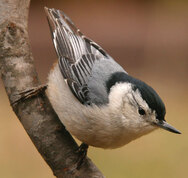
PictureWhite-breasted Nuthatch = .00001252 birdcoin
Now I wonder once more, why not birdcoin? (I have not Googled it, therefore it may not exist.) Instead of miners, this cryptocurrency would have birders. Birdcoin birders would enact "proof of work" by going for walks and spotting birds, then watching them. Enjoying them. Being moved by them. And that's a good thing because, in the words of novelist Margaret Atwood, who knows a few things about dystopia and its possibilities, "If you follow birds, it allows you to get a pretty global view of what's happening to the planet." (See Audubon magazine, Winter 2019.) Birdcoin, let's wing it!

0 Comments

Absurdocoin

1/3/2020

0 Comments

 
PictureIt's a byte, actually, not a coin
The recent killing by American drones of Iran's powerful  General Suleiman, a terrorist mastermind on par with Osama bin Laden, has supposedly led to a flood of speculation in the cryptocurrency known as bitcoin. Bitcoin shot up five percent, according to Forbes, as wise guys and fraidy cats sought safe harbors in case stocks and bonds cratered due to war in the Middle East. That's the scoop, at least. I don't pretend to really understand bitcoin. I have a hard time grasping its basic concept, no less the sense behind it. And I suspect it's a sucker's bet, a techno-fantasy for conspiracy theorists and uber-nerds. The heavy involvement in bitcoin by the Lunkhead Twins, I mean Winklevoss Twins, is a head-scratcher. But, again, who knows. High techno-finance, the realm of amoral equity-fund mandarins  and sell-out physicists -- a two-handed head-scratcher. 

However, there is no doubt about this: the bitcoin enterprise emits about 23 megatons of carbon every year, the equivalent of 1.2 million transatlantic flights. Bitcoin, whether it's booming or busting, results in a massively irresponsible waste of energy that is helping to fuel climate change. 

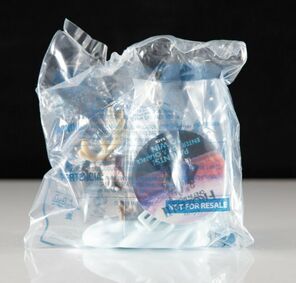
PictureFrozen 2 Movie Happy Meal Toy #4 -- sealed in plastic, of course
Why does it take so much energy to make bitcoin? The answer is complicated and not immediately apparent. This Investopedia article does a nice explaining the history and mechanics of bitcoin, but fails completely to note its environmental impact. It does relate how bitcoin miners at their high-powered computers compete to "produce" bitcoin and gain bonuses by solving vastly complicated math problems. Remember, there is no social purpose behind this computational Olympics; nothing tangible is made. Only bitcoin is made, sorta. The jacked-up computers of bitcoin miners run hot and hard, jumping through mathematical hoops, in order to satisfy "proof of work" principles and therefore imbue bitcoin with some hypothetical kind of value. The miners could just as well run marathons or help little old ladies across the street (without bilking them of their savings, we hope), but instead they expend massive amounts of electricity. 

Some bitcoin miners counter that they use renewable energy. Sure, fine, but that renewable energy could flow elsewhere to businesses that actually employ people and make things if the ridiculously wasteful and absurd pursuit of bitcoin mining did not exist. Then there's the deeply philosophical argument that burning coal to produce bitcoin is no worse than burning coal to make toys for McDonald's Happy Meals. Maybe, maybe not -- hey, here's an idea. Let's ban both practices -- the manufacturer of bitcoin and crappy plastic lumps of Frozen ​moose. 

So, let's recap. At a time in human history when we urgently need to come up with new, inventive ways to drastically reduce our global carbon footprint, the barons of cryptocurrency have devised a new and inventive way to raise our global carbon footprint. Yay bitcoin, buy it now!!     

0 Comments

Where Are They?

12/28/2019

1 Comment

 
PictureCHEOPS with eye open
Looking up at the night sky, it's hard not to wonder if there's intelligent life out there, somewhere, anywhere. Secondarily, you might wonder if those intelligent beings built civilizations that still exist today or if their great works came to naught due to calamities such as asteroid strike, nuclear war, plague, or climate change. It could happen to us; did it happen to them?

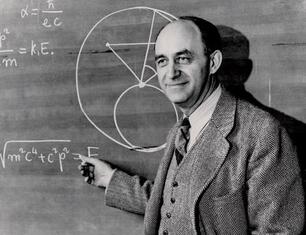
Enrico Fermi, leader of the team that created the world's first nuclear reactor, used to throw cold water on his colleagues' ET musings with this retort: Okay, then, where are they? Seriously, if the heavens are so dense with life, how come no one's stopped by for tea? Fermi, I think, was a bit of a nudge, but his question certainly focuses the mind. One of many responses to the Fermi Paradox is that outer-space aliens haven't visited because they simply couldn't develop far enough before meeting extinction from natural disasters or by their own collective hands. Again and again, promising civilizations failed to escape their "technological adolescence," in the words of the prophetic cosmologist Carl Sagan.  

Maybe, maybe not. Either way, we keep looking up. We keep wondering about new worlds. As of December, 2019, planet-hunting telescopes on Earth and in orbit have discovered approximately 4,500 exoplanets -- planets beyond our insignificant little solar system at the edge of the Milky Way Galaxy. Kepler, recently decommissioned, found thousands of planets. TESS, launched in 2018, is scouring nearby solar systems for rocky, Earth-like orbs. The latest addition to this armada is CHEOPS, sent up by the European Space Agency just ten days ago. CHEOPS stands for CHaracterising ExOPlanet Satellite and is also the name of the 26th Century B.C.E. Egyptian pharaoh who built the Great Pyramid of Giza. He'd approve of this project, I suspect.  

PictureDr. Enrico Fermi, brilliant nudge
​Primarily a follow-up mission of known exoplanets orbiting bright stars, CHEOPS is concentrating on 400-500 targets between the size of Earth and Neptune, also known as Super Earths. The powerful photometer aboard the satellite measures tiny changes in light when a planet transits its host star. From that scientists can calculate the planet's diameter. Combine the diameter with data from ground-bound telescopes and, voila, we have the planet's density and, perhaps, tempting clues to the planet's structure and atmosphere. Very cool, indeed. With the next generation of planet-exploring craft -- PLATO, AERIAL, WFirst and the James Webb Telescope, all slated for launch in the 2020s -- we might even be able to discern a planet enshrouded in carbon dioxide. Very hot, indeed.   

Time for a quick thought experiment, a twist on Dr. Fermi's question.  Let's say a spaceship full of beings from one of those exoplanets wreathed in carbon emissions makes its way to Earth. It lands on The Mall in WDC and meets with President Buttigieg. They're the last of their kind, they tell us through their Translatron 9000s. They industrialized too quickly and lacked the maturity to get off fossil fuels in time. Climate change didn't directly cause the near extinction of their species, but it was a main trigger for the wars that did. So, they urge us, learn from our story. Stop what you're doing now. Don't be another intelligent species gone down this sad cosmic road.

Would their visit make a difference? Would we even believe it's real? 

1 Comment

The Good Old Days

12/23/2019

0 Comments

 
Picture
“We now know that it will be much more expensive to not act on climate than to take even the most aggressive action today,” writes David Wallace-Wells in his captivating/terrifying book on climate change, The Uninhabitable Earth. While this statement of fact may not impel people to break open their wallets in the present, what with Xmas shopping to finish and tuition bills to pay, it does put matters into stark perspective. Like it or not, global society is in the process of making a huge decision about the future. We can decide not to act boldly and let the chips fall where they may. Or we can rise to the occasion and meet climate change with the urgency it requires. 

Global teamwork will be required, absolutely, but for the moment let's simplify things by just looking at the USA. Cynics like to assert that our nation can no longer come together in great national endeavors. We're too selfish, too partisan, too path dependent, too obsessed with comparatively minor issues. Okay, maybe, but it's instructive to look back and take note of when we have accomplished great deeds as a country. We won WW II, transforming ourselves into a military colossus within just a few years. After the war, we resuscitated Europe with the Marshal Plan (for a tidy $100 billion in 2018 dollars). We built an amazing interstate highway system from the Florida Keys to the Puget Sound, from San Diego to the potato fields of Caribou, Maine. Then we put men on the moon -- take that, Sputnik! And then, well, since then we haven't thought so big.  

Permit me, please, to go back a bit further to another feat of great national engineering. In the 1930s, FDR's Rural Electrification Administration brought electricity to rural America -- a vast, if forgotten, public works achievement that transformed life for millions and enabled the prosperity of the 1940s and '50s. The REA existed on the cutting edge of technology, using a 7200 volt distribution network that allowed lines to run up to 40 miles without significant voltage drop. REA crews traveled our vast land, stringing electrical lines, wiring houses and barns, and even putting light fixtures over people's kitchen tables. 

I was reminded of this epic feat last night as I watched The Homecoming: A Christmas Story, the 1971 TV movie that birthed the popular TV series The Waltons. Specifically, I refer to the scene in which John-Boy Walton turns on the Christmas tree lights. Electricity had come to the rural Blue Ridge Mountains of Virginia, allowing this family to illuminate its Xmas tree, buy labor saving devices and listen to news, weather and comedy shows such as Fibber McGee and Molly on the upright RCA radio stationed, like a magic portal, in the living room. 

Picture
We strung fat lights like that on my family's Christmas tree, in suburban Connecticut in the 1960s and '70s. I remember my oldest brother standing on a ladder, stringing them, and perhaps he announced, just like John-Boy did, that every light had to be in working order or nothing would happen. (Maybe there's a metaphor there for the fate of a nation.) When John-Boy plugged in the lights, his little brothers and sisters cheered as if a miracle had occurred. I like to think I got excited, too. 

Now it's almost 2020. Why not establish an SEA -- Solar Electrification Administration? Why not use loans, grants and every conceivable financial tool to bring solar power to the roofs and yards of homes and business across the USA? Why not employ SEA crews to roam the nation, hooking our grid to the sun and greatly lessening our dependence on fossil fuels? (Here I'll play Grinch and add that fossil fuels not only drive climate change but kill over 100,000 Americans every year through their inherent toxicity. So cutting them out would be a magnificent two-fer.)

Why not, indeed, come together as a nation to counter climate change? Yes, there are many, many reasons why it may not happen, soon enough or at all. But wouldn't it be something if in addition to fruit cakes, tube socks and Baby Yodas we decided to give ourselves and our children a truly precious gift for Christmas? Thanks, Mom and Dad, for the healthy, sustainable future!

0 Comments

A Wine Cave for the Apocalypse

12/20/2019

0 Comments

 
Picture
At last night's Democratic debate in Los Angeles, presidential aspirant Elizabeth Warren lambasted co-aspirant Pete Buttigieg for attending a fundraiser in a fancy-dancy wine cave in Napa Valley. (You can't make this stuff up.) They went back and forth like Rock 'Em Sock 'Em Robots and who won is grist for the pundit mill; Mother Jones nicely captures the gestalt of their exchange. The Lizzie-Pete Dust-Up in the Desert (L.A. used to be a desert and may soon return to its natural state) got me thinking about rich folks and, of course, climate change...and wine caves. 

What the heck is a wine cave? Is it a cave sculpted by the drip, drip, drip of all the wine spilled, splashed and spit into the Napa Valley dirt? Has the Gallo Refinery sprung a leak? And if you licked the tip of a stalactite hanging from a wine cave's ceiling, would it present earthy notes of blackberry, leather, licorice, chamomile and Marion's lemon-meringue pie? Actually, an enormous chandelier with 1,500 Swarovski crystals hangs in the wine cave frequented by Humble Mayor Pete. But don't lick those! Swarovski crystals are  very expensive shards of man-made lead glass. ​

Picture
Questions, so many question. If (when?) the climate change-induced Apocalypse occurs, will the billionaires and their multi-millionaire lackeys retreat to the wine caves? If so, how will the One Percent of the One Percent power said caves? Perhaps with geothermal energy sequestered from the ravening bands of commoners roaming the surface world? Too grim? Then let's ask a more pertinent question: how can we at least motivate wealthy people to power their present day wine caves (and second homes and yachts and sports cars and robot butlers and pied-a-terres, gotta have a pied-a terre) with renewable energy sources?

It's not cost, of course. Slapping solar panels on the roof is a trivial expense for the rich. But other than adding a Tesla or two to their vehicle fleet, most "people of means" just can't be bothered. Well, there's always the moral approach, the appeal to intergenerational responsibility...all right, come on, stop laughing. What about this? Maybe the secret to changing the dirty, fossil-fuel burning ways of the ultra-rich is to inconvenience them. Man, they hate that! Waiting in lines, being put on hold. Not being sufficiently sucked up to. Having to walk to the wine cave, then arriving late and missing the kale-encrusted sea bass sliders washed down with a $900 bottle of Pouilly-Fuisse. That's life for most of us; it's agony for the extremely well-heeled.

This dynamic played out during the recent outbreak of wildfires in California. To prevent blazes caused by sparking from powerlines, PG&E instituted precautionary power outages to various communities irrespective of their income levels. Hence, people in some of the richest enclaves found themselves without electricity, and without a say in the matter! Within days -- as outraged Masters and Mistresses of the Universe sat in the dark, as the most delicate vintages suffered without the coddling of their wine fridges -- orders for solar panels and battery units shot up in WealthyTown. 

Simply put, we must inconvenience them into doing the right thing.  A future blog will further explore how to go green by goosing the rich.     

0 Comments

Good Meetings, Bad Meetings

12/15/2019

0 Comments

 
Picture
Most meetings kind of suck. They suck less when there are cookies. I prefer big chocolate-chip cookies, the chips like tasty depth charges, washed down with a nice Cabernet Sauvignon.   

​However, cookies and wine aside, if you have to attend yet another meeting featuring the endless droning of your beloved colleagues or townsfolk, it's fun to at least pretend to get something done. For instance, why not make a widely ambitious, voluntary pledge, even if said pledge is lacking in concrete prospects. Good intentions count, right? People can be inspired to change their ways. And visionary pledging sure beats lounging in lassitude as everyone agrees to kick the crucial decisions, can-like, down the road. 

Such idealistic meetings, surely, produced the recent pledge by the European Union to go climate neutral by 2050. Bam, all of it, energy, transportation, farm animals -- all greenhouse emissions to yield no net impact on the climate. Twenty-six countries are on board, while Poland pouts in the corner (We want to burn coal! We want more money if we can't!) and the U.K. goes Brexit, stage right. That's about 550 million people, not counting the Brits. Impressively, the E.U. allows for little procrastination, requiring itself to get halfway there by 2030. Well, "requiring" may be a little strong, since there's no penalty for failure in this agreement. Let's say strongly suggesting...at any rate, you'll be shunned and served weak tea at the biannual shindig in Brussels if you don't at least try.      

Picture
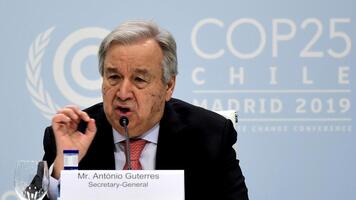
Back to meetings that truly suck -- such as the recent United Nations conference on climate change that concluded a few days ago in Madrid. Well, "concluded" may be a little strong, since nothing apparently happened. Let's say it fizzled or ground to a halt in a spasm of self-recrimination and selfishness as youth protesters hollered bloody murder outside the halls. UN Secretary-General Antonio Guterres, like a dad surveying junior's abysmal report card, tweeted that he was "disappointed." Then, silently, he returned to his newspaper. And now, drum-roll, for the award ceremonies. Gold, silver, bronze and platinum medals for obstructing progress at even making a wildly ambitious, voluntary pledge: USA, Brazil, China and India! These countries just happen to be the world's major greenhouse gas emitters. 

But rest assured, said the representatives of the world's leaders,* we're reconvening next year. That meeting in Glasgow, Scotland will be COP-26, for the 26th annual meeting of the Conference of Parties as directed by the Intergovernmental Negotiation Committee for a Framework Convention on Climate Change (INCFCCC). Let's hope that COP-26, unlike COP-25, will not be another COP-out. 

Bad puns for bad meetings. As for the cookies at COP-25, they were vegan so...yeah.    

*"Leaders" may be a little strong. Let's say flawed human beings like you and me who have risen beyond their level of expertise, or maybe timid toadies of the status quo, or rapacious exploiters of...  

0 Comments

The Third (Green) Article of Impeachment

12/13/2019

0 Comments

 
Picture
ARTICLE III: DESECRATION OF GENERATIONAL DUTY

The Constitution provides that the House of Representatives “shall have the sole Power of Impeachment” and that the President “shall be removed from Office on Impeachment for, and Conviction of, Treason, Bribery, or other high Crimes and Misdemeanors.” In his conduct of the Office of President of the United States, Donald J. Trump has repeatedly and without remorse committed the treasonous high crime of injuring the health and welfare of American children, now and in the future, by grievously ignoring and wantonly exacerbating the unprecedented and existential crisis of climate change. The right to a climate system capable of sustaining human life is fundamental to a free and thriving society. The president's actions have undermined affirmative measures to address climate change and, therefore, have violated the youngest generation's rights to life, liberty and property that are enshrined in the Constitution and entrusted to a President as an inviolable and sacred duty.  

Picture
President Trump engaged in this scheme or course of conduct through the following means:

1) In contravention of overwhelming scientific consensus, the President denied the existence of the material threat posed by climate change, casting doubt on scientific experts and portraying climate change as a "hoax" perpetrated by China and other malevolent actors. Concurrently, for his private benefit, the President accepted millions in political contributions from fossil-fuel burning industries responsible for emitting greenhouse gases that are the principal cause of the crisis. Together these actions have served to obfuscate truth, discredit the office of the presidency, and dangerously delay the required national response to climate change. 

2) In defiance of the international community, the President issued notice to withdraw the United States from the Paris Agreements, a treaty signed by 197 countries as the principal global mechanism for coordinating and strengthening efforts to address the climate crisis. This historic forfeiture of leadership failed to serve the interests of the United States or the world at large and constituted an extreme betrayal of the President's duty to protect our country in emergencies and to preserve conditions essential to the present and future thriving of the citizenry.    

3) Through cabinet agencies and Executive Actions, the President aggressively moved, in hundreds of instances, to cancel and diminish regulations that mitigate climate change and its consequences. Examples included the suspension of mileage standards related to vehicles, the weakening of rules regarding methane leakage at oil and gas facilities, and the transfer of protected federal lands to private industrial interests. In addition, the President increased financial subsidies to corporations which, through the extraction and burning of fossil fuels, accelerate climate change and greatly multiply its current and future costs. 

In sum: by failing to safeguard the constitutionally protected rights of young people to an atmospheric system that allows for the free, untrammeled enjoyment of liberty and the pursuit of prosperity, by betraying the intergenerational contract explicitly determined in the Constitution, and by continuing this train of abuses without respite or regret, thereby causing to burden the next generation of leaders with a global crisis potentially beyond effective remediation, the President has henceforth assumed to himself functions and judgments necessary to the exercise of the “sole Power of Impeachment” vested by the Constitution in the House of Representative.    

0 Comments
<<Previous
Forward>>

    Author

    Hal LaCroix has been a newspaper reporter, magazine editor, PR professional, book author, environmental advocate and college instructor, among other endeavors. He lives in Somerville, Mass. with his wife Elahna. 

    Archives

    February 2026
    January 2024
    October 2023
    April 2023
    March 2023
    January 2023
    December 2022
    November 2021
    August 2021
    June 2021
    May 2021
    April 2021
    September 2020
    August 2020
    February 2020
    January 2020
    December 2019
    November 2019
    October 2019
    September 2019

    Categories

    All

    RSS Feed

Proudly powered by Weebly