THE TREE LINE
  • Just Warming Up
  • Here and Beyond
  • Journey Out of Darkness
  • Monadnock Blog
  • Dachau and Climate Change
  • Generation Chasm

Just Warming Up

Thoughts on Life in the Anthropocene

Denial and Despair

11/26/2019

0 Comments

 
Picture
Once every few weeks, while reading my digital edition of The New York Times, I dip into the reader comments sections. I know, I know, what's wrong with me? Why descend into that sewer of partisan bickering and cherry-picked misinformation? Well, maybe in the NYT Comments section can be found the true, ragged pulse of America...who knows. Anyway, some of the comments are actually quite bracing and witty. Such as this one, attached on November 9, 2019, at 11:01 a.m. to an op-ed warning about the dangers of climate change:

Samantha
Elk Cove 5h ago
The planet changes. Wow, what a revelation. A planet "experts" say is billions of years old is irreversibly "changed" due to one species' proclivities for a mere 150 years? Is THAT the posit? Or rather, is it another of this species' proclivities -- herd behavior -- at work in the "scientific community"? Tell you what, concerned persons -- when the one percent adjust THEIR lifestyles to that of the rest of us, and that includes the Hollywood swells, the Windsor whiners, the loudmouths on daytime inculcation shows -- we'll start listening. Until then, the birdcage needs lining.
3 Replies 3 Recommend

I get it, Samantha. It is a little hard to believe that we can screw up our massive planet so massively in such a geologically short period of time. And people do run in herds, it's true. Kudos, too, for the old-timey reference to lining the birdcage with your copy of The New York Times. Reduce, reuse, recycle -- Sustainable Sam, you are.

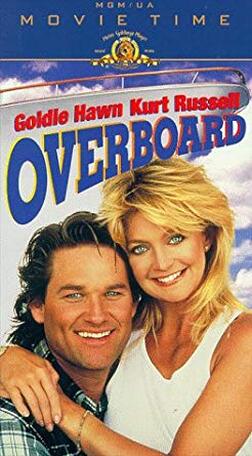
Hey, do you really keep a bird in a cage? A tweety little parakeet? I see you as a spinster receptionist at a struggling insurance agency in Elk Cove...wait a second, Elk Cove is a meadow near Mount Hood in Oregon. As a town, it only exists in a fictional sense -- specifically, in the 1987 film Overboard starring Goldie Hawn and her husband Kurt Russell. Samantha, for all your railing against "Hollywood swells" have you dreamed yourself into a corny, slightly creepy '80s rom-com in which a rich heiress gets amnesia and is kidnapped by a slob carpenter who convinces her they're husband and wife?

Sheesh, talk about denial. 

Picture
Today, I did it again. Stuck my toe into the swirling pool of commentary attached to a NYT article about a new, depressing UN report. This one details the world's failure, four years after the Paris Accords, to make any progress in reducing emissions of greenhouse gases. One comment, noteworthy for its despair, floated up:

N
NYC 3h ago
​
It’s all too late. Something should have been done in the 1970s when global warming emerged as a problem. Eating vegan, using reusable bags, and driving an electric car will do absolutely nothing. Fossil fuels are indirectly used to produce all of the above.
1 Reply 15 Recommend

N, that's some attitude you got there. By the way, what does N stand for? No, nyet, nunca, nein? Negative Norbert? Perhaps you should leave the grimy confines of your megalopolis and travel upstate to an apple farm. Breathe the cleaner air, step in a methane-emitting cow flop, watch a few birds that aren't pigeons. And, please, read the rousing rejoinder that your comment elicits from Rose of Seattle. Patiently, she explains how being vegan, reusing bags and driving electric cars reduce a person's carbon footprint. We're not looking for perfection here, N.

​Rose also recommends that you read something called "Planetary Hospice." Hmm, that doesn't sound very rosy. Perhaps you guys aren't so different after all. I see a movie, Planet Overboard. The wacky adventures of a burnt-out New Yorker who comes down with amnesia on a camping trip to Elk Cove and is kidnapped by a sweetheart from Seattle who convinces him to eat sprouts, tote a NPR tote bag and drive her Nissan Leaf with a smile -- even though mankind has entered its hospice stage.

I'd watch that, wouldn't you?  

0 Comments

Chemistry Class

11/22/2019

0 Comments

 
Picture
​A couple of nights ago, the Democratic pretenders to the presidential throne once more assembled inside my boob tube to debate. Some wanted Medicare for All. Others, Medicare for All Who Want It. Still others, Medicare for Apathetic People on Alternate Days of the Week. Tom Steyer was one of the ten contenders, seated on the far-right edge of the stage near the exit sign. A billionaire and environmental activist, Steyer stated that the U.S. Congress has never passed significant climate change legislation. My older brother, parked in my favorite purple wingback chair and glancing between the TV, his cellphone and his laptop; my brother, a multi-thousandaire and author of Hawai’i: Eight Hundred Years of Political and Economic Change; my brother, rarely shy to interject his opinion, muttered, “That’s not true.” Brilliantly, I responded: “Yes, it is.” His riposte: “No, it’s not. Ozone legislation.” I returned: “That was environmental legislation, not climate. Climate has a different chemistry.” He grumbled dismissively.  

Oh no, here we go into the ozone – battling brothers edition. The upshot is that he was wrong, and right, and I was right, and wrong. Turns out, ozone is complicated.
​
As a popular meme, ozone first appeared in the early 1990s when President George H.W. Bush (RIP) labeled vice-presidential candidate Al Gore “ozone man” for his preoccupation with climate change. Tarring Big Al as kooky green was a family project, with George W. Bush snidely employing “ozone man” in the 2000 presidential election. Maybe it won him Florida.       

Picture
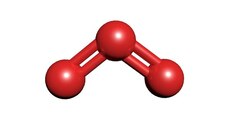
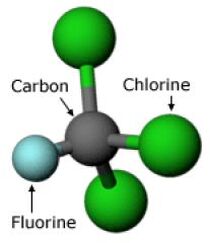
Ozone is three oxygen atoms bonded together. It exists naturally in the Earth's atmosphere, as a layer in the stratosphere that protects us from full bombardment of ultraviolet radiation. Chemicals called CFCs (chlorofluorocarbons), used commonly as aerosols and refrigerants, degraded strastospheric ozone in the second half of the 20th century, causing a hole in the ozone layer over Antarctica. This allowed more UV rays to penetrate, which is very bad because UV radiation plays a major role in causing non-melanoma skin cancers (basal cell carcinoma, squamous cell carcinoma) and malignant melanomas. Rich people couldn't think of a good way to buy themselves out of this fairly immediate threat to their health and still enjoy the sunshine, so they allowed the international community to produce the Montreal Protocol in 1987, which phased out CFCs and most other substances destroying the ozone layer. And it worked; the ozone layer stopped declining around 1995.      

Picture
The Montreal Protocol, technically, was not legislation produced by Congress. It was an international treaty that the U.S. signed and then Congress ratified. Moreover, the treaty wasn't designed to fight climate change; the focus was almost entirely on preventing cancer. However, CFCs also happen to be potent greenhouse gases. They are far less abundant than CO2 but more powerful and longer lasting in the atmosphere. So, by happy accident, or lucky happenstance, the banning of CFCs did reduce the emission of a category of greenhouse gases that contributes to climate change. But it did not address the main driver of climate change: the burning of fossil fuels. And it wasn't hard to do, giving up cans of explosive hair spray and putting new chemicals in refrigerators. Limiting climate change by radically changing the global energy, transportation and agricultural sectors -- that's gonna by a doozy.    

Picture
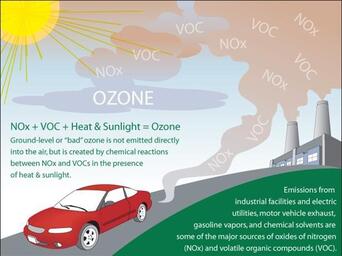
So, this Thanksgiving, if your contentious brother or wacky, denialist uncle or persnickety gramma starts up about ozone, you're ready. Check out the Skeptical Science website for quick comebacks about 197 global warming myths! The idea that the ozone layer is somehow causing global warming is covered in myth #137. Finally -- relax, class, we're almost done -- there's also a form of pollution called ground-level ozone. It has nothing to do with the ozone layer, but is a major component of summertime smog caused by the interaction of heat, sunlight and industrial byproducts associated with fossil-fuel combustion. Okay, that's it, there's the bell, bye-bye everybody. 

0 Comments

Eversource, Dynegy, Vistra

11/18/2019

0 Comments

 
Picture
I don't fully understand my electrical bill. Really, who does?

Okay, diving in, first you got your supply charge, or generation service charge, which is the product of the kWhs they send you times your electrical rate. Easy enough, but does that mean the amount you receive at home or what leaves the power plant, since between five and 15 percent of electricity is lost along the way depending on voltage? Dunno. Then you've got the delivery charge, which is comprised of intangible sub-charges they invent to pad the bill, especially for ingrates grabbing free energy from the sun. Namely: customer charge, distribution charge, transmission charge, transition charge, revenue decoupling charge, distributed solar charge, renewable energy charge, and energy efficiency charge. Not to mention bureaucratic intransigence charge, fat cat vacation house charge, repair van idling in front of your house charge and WiFi winking out when house guests arrive charge. Yes, I jest in that last sentence. And to be fair, the revenue decoupling charge on our last bill was negative, coughing up two plump pennies. 

You see, my wife and I are considering installing an electrically powered heat pump to mostly replace the natural gas-powered furnace that warms our home. But how much would that reduce our carbon footprint, and thereby make an incredibly tiny contribution to fighting climate change, if the electricity running the heat pump comes from burning fossil fuel? Then I remembered that years ago I signed up through my electricity provider, Eversource, for the green supply option via a company called Dynegy. The very same Dynegy that's recently been bought by Vistra. Eversource, Dynegy, Vistra; Eversource, Dynegy, Vistra. It's kind of hypnotic to say aloud, Eversource Dynegy, Vistra, and the upshot is that any electricity I get off the grid, by the magic of the renewable energy credit market, is produced by renewable means (wind, solar, hydro) somewhere in the windblown, sunburnt, rushing-water USA.

Whew! And the price is nice, too, thanks to my town of Somerville which negotiated a community-choice electrical aggregation rate. I think. Well, I know this much: I did not reply to a scamming come-on from a company such as CleanChoice Energy who, like the cable TV companies, will snag folks with a sweet intro rate and then jack up future charges. Because, they claim, renewable energy costs more than polluting energy. Which, you should know, it usually doesn't anymore.

Skeptical? Take it from Forbes, a notoriously leftie publication.   

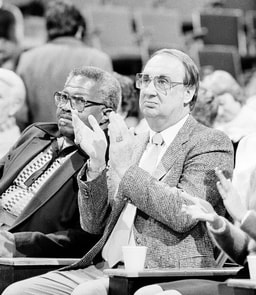
PictureThe immortal Ted Stepien
Speaking of Vistra, headquartered in Houston, Texas. That energy company, historically a prodigious burner of coal, claims in an October 2019 press release to be going green. They can do this, in part, thanks to their recent purchase of Dynegy, which of course partners with Eversource. Vistra, Dynegy, Eversource. Anyway, Vistra promises to reduce its CO2-equivalent emissions by 50 percent by 2030 (with 2010 as a baseline). Moreover, they aspire to an 80 percent reduction by 2050 -- assuming, that is, and here's the usual corporate wiggle-speak, "necessary advancements in technology and supportive market constructs and public policy."

​That last bit means they want a carbon tax. They practically beg, later in the press release, for the government to regulate the economy in such a way to force them to produce green energy. So, you might ask, why not just do it now? Why do you have to be made to do the right, and smart, thing? For the same reason, I suppose, that NBA owners came up with the Ted Stepien rule, prohibiting the trading of first round draft picks in consecutive years. It's named for the former owner of the Cleveland Cavaliers who couldn't resist mortgaging the future of his team in order to win games now. 

Of course, Ted Stepien was just screwing up a basketball team. The profit-obsessed jokers who own our polluting energy companies are playing with the futures of our children. 

0 Comments

Henry's Pond

11/14/2019

0 Comments

 
Picture
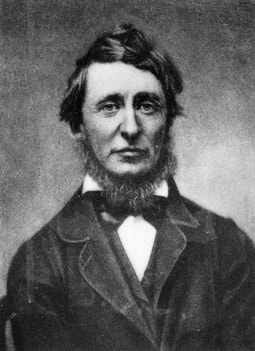
Last weekend, a few days before I turned 59, I went for a walk around Walden Pond. My wife was away for the weekend and it was sunny-autumn-crisp out and I was being a total slug on the couch, watching old episodes of M*A*S*H, so, what the hell​, I drove west to Concord and circumabulated the pond that Henry David Thoreau made famous in his 1854 book Walden, or Life in the Woods. It was uncrowded. A few strollers strolled and a gaggle of giggling Chinese students, wait for cliche, took photos of everything. Two fishermen, still as logs, floated in row boats. A swimmer in a wet suit churned across the pond, bisecting it the long way. The trees' leaves had turned weeks ago, but some retained hints of dying color, and the water's flat surface winked like a blue diamond. My counter-clockwise jaunt included a stop at the site of Thoreau's cabin, long ago dismantled. As per tradition, in homage to the writer/recluse I tossed a stone on a pile of millions of stones sinking into the resistant earth.  

About a half mile from the cabin, in Thoreau's time, a train had rattled by now and then. All that infernal locomotion got him thinking: "We do not ride on the railroad; it rides upon us." 2019 update: "We do not use the Internet; it uses us." Thoreau also advised us to simplify: "Keep your accounts on your thumb nail." 2019 update: "Get offline, already." 

Near the parking lot at Walden Pond there's a new visitor center powered entirely by a rack of solar panels. Here I was reminded that Thoreau succumbed to consumption. In old-timey speak that means he died of TB -- a very writerly demise. Perhaps staring at a blank piece of paper inhibits the immune system. I also realized that Thoreau was only in his late 20s when he stayed for two years alone at the pond. Somehow, I thought he was older. Perhaps because his photos make him look aged; or perhaps because it's hard to imagine a young man having the patience and fortitude he exhibited. Thoreau kept meticulous logs of flora and fauna at the pond, which are now used by Boston University Professor Richard Primack to pinpoint the degree to which spring comes weeks earlier to Walden Pond than it did in the 1840s. The quickening spring, caused by climate change, has produced a cascade of problems for birds, bugs and flowers -- details are available in this short NPR radio report.     

Picture
Something stuck with me, the other day at the pond. I stopped on a rise above the main beach, a grassy area among several towering red oaks. Acorns crunched underfoot. The wind picked up and I stood beneath one of the trees as dozens of leaves freed themselves from the tips of branches yawning 40, 50 yards above my head, and down the reddish-brown leaves floated, twirling down, down, down. Suddenly I recalled doing this as a child, in the 1960s: standing under a tall tree as a wind-gifted flurry of leaves fell toward me. Then, as now, I wanted to grab a leaf before it hit the ground; to accomplish this goal, then as now, I  settled on two techniques. One: pick out a single leaf and race about in pursuit, following its zigzagging, wind-whipped chaotic path. Not easy, for a nimble kid. Absurd, for a gimpy semi-oldster. Two: just stand there and wait, hand outstretched. Sooner or later, a leaf will come to you. As a kid, of course, I could never wait long enough for this miracle to occur. As an adult, the same.    

In 2019, on the cusp of my 60th year, I tried to catch a spinning, falling leaf and failed -- at first. Then I faked left, ducked right, jumped up and, snatch, got one! I brought it home, took its photo. Now you might say that the best way to catch a falling leaf is to pick it off the ground after it finishes falling...yes, you're right, but you don't get it. Then it's not falling anymore. And here's where I assert that addressing climate change is like standing in wind under an old-uncle red oak that's stubbornly, generously shedding its leaves, and the wind is time and the leaves are policy ideas, or people, or maybe greenhouse gases, and the leaf-catcher symbolizes our crazy world overwhelmed by...

0 Comments

Green Mobilization

11/11/2019

0 Comments

 
Picture
A few months ago, a professor at Notre Dame wrote a fascinating opinion piece in The New York Times that explored the growing practice of casting the fight to prevent climate change as the equivalent of war, and specifically World War II. It's a good read for today, Veteran's Day, when we honor men and women who've served in our nation's many wars, right up to the recent conflicts in Iraq and Afghanistan. The author, Roy Scranton, reminds us of the vast and bloody upheaval of the World War II years, at home and abroad, and then goes on to say that full-scale mobilization against climate change, while certainly necessary, may in fact be an "order of magnitude larger and more complex than America’s military mobilization during World War II" and may bring with it "social upheaval, violence, censorship, curtailed freedoms, dubious compromises and radical changes in American culture and politics."

It's the kind of hard-headed, pessimistic op-ed that pleases no one, except perhaps the fatalistic who will respond, see, it's just too much trouble. Let's let it ride. Hope for a (techno) miracle. G-d's will and all that.  

Professor Scranton may be right, that tackling climate change will be a real ferocious bear and not some win-win scenario denied us by recalcitrant politicians. Let me add that Americans seem far less willing to make sacrifices for the country than they were in the patriotic WW-II era. For all our whining, we've got it pretty good compared to our grandparents. We're kind of spoiled, actually. There's no required national service or draft, and few rituals other than watching the Super Bowl or fireworks on the Fourth of July bind us together as a people. Granted, we claim to be worried about climate change, but support for going "over the top" to stop it falters when the bill comes due. In a University of Chicago poll last year, less than a quarter of folks are willing to pay $40 per month to clobber this enemy. Fifty-seven percent will contribute a buck monthly. Buy Climate War Bonds!?  

Picture
War metaphors have been overused by politicians in recent decades. In 1964, President Johnson declared "unconditional war" on poverty. President Nixon declared a War on Drugs in 1971. President Carter referred to the nation's struggles during the Arab oil embargo as "the moral equivalent of war." Then there's the perpetual War on Cancer, featuring valiant doctors and patients "fighting" the disease (with the offensive implication that anyone who succumbs to cancer didn't battle hard enough; news flash, survival is due to luck and the quality of medical care). I'm sure there's more; the wars against this and that problem -- all unsolved -- keep piling up. Perhaps it's best that we avoid these war metaphors, just as we should shy from characterizing our political opponents as Nazis. Let's leave war in the literal realm, where its awfulness can remain brutally undiluted by comparisons.  

So, then, what do we call it, the epic national and worldwide response to climate change that is required? A campaign? No, too weak. A crusade? No, too controversial. The Green New Deal is catchy, but has acquired a socialist-commie tinge. Movement, mobilization, jihad? How about The Great Awakening? Whatever term is used for this period of rapid change, it should convey the sense that it's gonna be exciting, rough, tumultuous and unprecedented. Live Green or Die?

0 Comments

Contemplating China

11/8/2019

1 Comment

 
Picture
For all you Cixin Liu fans out there, an English translation of his Supernova Era is finally available. Written in 2004, this bonkers novel about a celestial event that kills everyone on Earth over the age of thirteen is probably not the best place to start reading Liu, the master of Chinese science fiction. (With Stephen King and Haruki Murakami, he ranks as one of the world's most popular and translated authors.) A couple of years ago I began with Liu's epic trilogy, The Three-Body Problem. After catching up on sleep, I next sampled his mind-twisting short stories in The Wandering Earth, gobbled up Ball Lightning and just last week found Supernova Era. This time-reversed consumption of the author's work was a bit like hurtling backwards 13.8 billion years to the Big Bang, when all the craziness, leading to us, began. 

But we're not a book-review blog. We're all about climate change here, about hanging in the Anthropocene Era, so make sure not to skip Liu's illuminating Afterword to Supernova Era, written recently. In it, he asserts that "China used to have no sense of the future. In our subconscious, today was the same as yesterday, and tomorrow was going to be the same as today. The future as a concept doesn’t really appear in traditional Chinese culture…But today, ‘futuristic’ is the most salient impression one gets from China. With everything changing at a blinding pace, a breathtaking future rises like the sun from the horizon, fully compelling, yet suffused with terrifying uncertainty and danger…"  

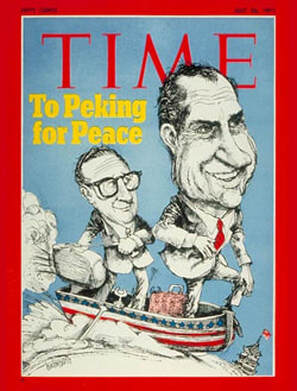
I've never been to China, but it's always fascinated me. As a kid I eagerly followed news about ping-pong diplomacy and Nixon's voyage to meet Mao. A copy of Life magazine with a cover photo of cyclists flowing through Tiananmen Square, every person dressed in identical gray uniforms, sat like a portal to another world on the round, marble coffee table of our suburban Connecticut home. Today, I understand fully that China -- now a nation of automobile drivers and meat eaters, of people buying their first air conditioners -- is the most prolific current emitter of greenhouse gases. What they choose to do in the next several years will greatly determine to what degree climate change wrecks havoc on human civilization. 

​So what are they going to do?  ​ 

PictureCixin Liu
I don't know; nobody knows. Maybe China will build hundreds of new coal plants. Or carpet the Gobi Desert with solar panels. So far, it looks like they're doing both. Could they be willing, given new American leadership in 2020, to enter into a climate agreement that's more binding and effective than the Paris Accords? Will President Pete Buttigieg and his two rescue dogs make an epic mission to China that culminates in a World New Green Deal? Or will it be just more superpower ping-pong: back and forth, tit for tat, tariffs up, tariffs down. Hong Kong, Taiwan, perpetual cyber war. And billions of crappy-plastic Happy Meal toys, made in carbon-belching Chinese factories, floating across the Pacific to our grateful shores...

China, which prizes conformity and tradition, is changing at warp-ten speed. Confusion reigns, especially among middle-aged and elderly folks. But the younger generation, writes Liu in his Afterword, "is wholly integrated into this new world as native inhabitants of the information age. They are deft users of the internet with no need for instruction, and have quickly adopted it as an inseparable external organ. To them, this is the way the world ought to be, and change is a matter of course." And yet -- my observation, not Liu's -- China represses free speech and basic human rights. And yet it remains a totalitarian country run by a gang of corrupt old men.

China: dizzying and contradictory, inspiring and depressing all at the same time. Liu, however, has tastier cosmic fish to fry than one burgeoning country. He circles back to mankind's fear of abandonment, a wild emotion that he sees as the ultimate driver of behavior. "Humanity," he states, "is an orphan unable to find its parents’ hands." ​If this is so, perhaps it's time we stop looking up at fading icons or down glumly at our feet or with catatonic rigor at our omnipresent screens,. Rather, maybe we should look to the sides, to the flailing hands of our brothers and sisters, here and across the seas, as we like it or not step together into the breathtaking future. 

1 Comment

Amazon Still Burning

11/4/2019

0 Comments

 
Picture
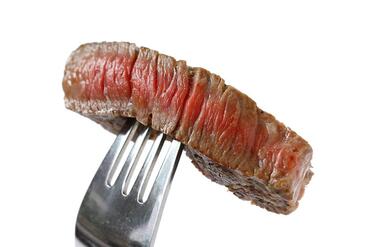
Why, my father-in-law asked calmly, are you a vegetarian? Is it for health reasons? We were in the middle of dinner -- can't these questions be asked before or after the actual chewing? -- and I looked across the table where my wife's stepmother was starting a hunk of meat on its grim journey from fork to alimentary canal. Next to her, Elahna sipped her wine. No, I answered, just as calmly, it's to lower my carbon footprint -- meat production expends a lot of greenhouse gases. Also, I have problems with the cruelty toward animals that's a feature of industrialized agriculture.
​
Coleman nodded, and so reigned a moment of long, greasy silence in their cramped dining room on Long Island. Then Marilyn easy-morphed into stepmonster, asserting how she, at least, turns out lights when leaving rooms, unlike Elahna who had left a bulb burning down Western Civilization in the guest bedroom. I defended my wife by reminding Marilyn of her huge carbon footprint as she flies around the world clutching her bucket list -- Ghent altarpiece, check; blue-footed boobies of the Galapagos, check -- and she snorted, the planes are going there anyway, and then Elahna chimed in with her firm-but-tolerant voice and Coleman kept eating, munch, munch, munch, and I reminded myself not to answer questions about being a vegetarian in front of meat eaters, never ever again.  

The very practice of abstaining from eating animals is an affront to many people. It hits a chord, and so has arisen the meme of the sanctimonious vegetarian making everyone else feel bestial and selfish. But in my experience, just refusing to dig into the roast beast is enough to unhinge a lot of people. And if you're a vegan -- Good G-d! Don't tell me, you're off-the-grid, too?

Picture
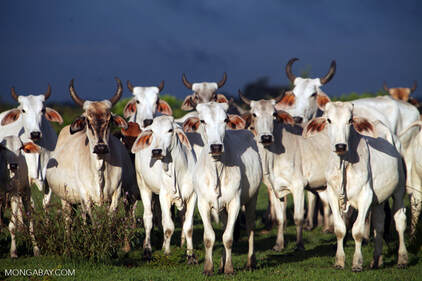
I thought of that dining encounter the other day after reading an article about the thousands of fires, primarily set by ranchers, now burning in the Amazon rainforest. The goal is to clear more land for cattle grazing. Simple as that, and to hell with the consequences: one of the planet's great carbon sinks is being destroyed to meet growing worldwide demand for steak and hamburger. Supposedly there's an agreement, negotiated by Greenpeace, requiring Brazilian meatpackers to avoid cattle raised on lands cleared by fire, but this regulation is got around by laundering the animals from ranch to ranch. Then I tripped upon another article; it seems that deforestation in the Amazon may altar the rainforest's weather system, converting much of the multitudinous habitat, reservoir of 100 billion tons of carbon, into scrubby savanna.  

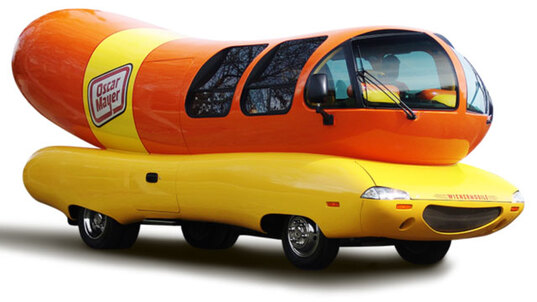
​Could mankind's skyrocketing appetite for spare ribs and sirloin steaks doom us to runaway climate change and worldwide species decline (including our own)? Yes, it's possible. I'll spare you the statistics today as well as the nanny lecture about cutting down your meat consumption, embracing Meatless Monday and Fishy Friday and generally being more mindful of what you cram down your craving-craw. But I will say that I've eaten meat for most of my life and enjoyed it, with a growing background sense of unease in recent years. As a kid I loved Oscar Mayer Wieners and their commercial jingle. I ate hash from cans and even tried the dog's horse meat from his bowl -- not bad, a bit salty. I made the switch to vegetarian (including ocean-caught fish) at age 55, and fairly suddenly, during my recuperation from open-heart surgery. One day I picked up Yuval Noah Harari's amazing book Sapiens, read the chapter on our relationship to animals, and that was that. 

Why, you ask, am I a vegetarian? Oh, that's a long, boring story. But what a nice brooch you're wearing! And how about those Mets...   

Picture
0 Comments

You Can't Hate Half the Country

11/1/2019

0 Comments

 
Don't change horses midstream, the old saying goes, but it's a probably a good idea when traversing the endless desert that is the nominating process for the 2020 presidential election.

​Last spring, inspired by his laser focus on climate change, I supported Governor Jay Inslee for president. So did his mother; that was about it. When Inslee dropped out, my allegiance switched to Senator Cory Booker, who made an excellent showing at CNN's climate town hall. Alas the senator has not found traction with many voters -- his polling tires, you might say, are as bald as his head -- and I've grown tired of his endless texts and emails to join some contest to have dinner with him and his girlfriend, actress Rosario Dawson. After a while, it got a little creepy. Breaking up, it turns out, wasn't that hard to do, and off I sallied yesterday in search of a new candidate who is both committed to addressing climate change and who can defeat, soundly, our current president. 

It was clear sailing north on I-93 from Boston, but not for the poor souls stuck in southbound commuting traffic, a car clog stretching to the New Hampshire border. Along the way I learned from NPR that the House of Representatives would vote to authorize impeachment proceedings of Donald Trump. There's a new children's book about fry bread and Native Americans. The Celtics beat the Bucks at the Garden! And the Chinese are beating us to 5G phone technology, which basically means it's time to download Chairman Xi's digital Little Red Book.

Soon I pulled off at the Derry, NH exit and parked behind Mary Ann's diner, where I ordered the #2: two eggs over easy, two fat slices of french toast, and too much home fries, beans and toast, all for $6.99. Fifties music played and the table was plastered with ads for local businesses. "Score Big -- Get Cash for Scrap Metal!" promised one. The eagle emblem for Wayne's Tattoo World contained an acronym that either refers to a computer process, File Transfer Protocol, or to a lack of faith in local law enforcement.  
Picture
Picture
Then down Broadway I strolled to the Derry Opera House where 37-year-old presidential candidate Pete Buttigieg -- at 18 percent in the latest Iowa poll, just the toss of a cow chip behind front-runner Elizabeth Warren -- was slated to speak. Dutifully, I took my place in line outside an old brick structure that looked more like a million local libraries than the Sydney Opera House. It had started to rain, lightly, and a young campaign worker told me that hearing Mayor Pete in person was a "magical" experience. I certainly hoped so, because he comes off a bit stiff in TV debates. 

Not here, not on this day. The Mayor of South Bend, Indiana seemed relaxed on stage. Warm, personable, and almost dynamic. Not magical, certainly but I guess I've grown cynical over the years. I could be the grandfather of that idealist campaign worker. Good G-d, I could be Mayor Pete's dad! It was especially heartening that Buttigieg introduced climate change just three minutes into his stump speech, and then again several minutes later, calling the issue "the global security threat of our time." I also liked the way he didn't shy from speaking about freedom and patriotism, words that Republicans have "captured and caged." Patriotism, for Mayor Pete, is a shared national value. "But you can't love your country," he stated, "if you hate half the people in it."  

He didn't make a big deal about being a veteran who served in Afghanistan. He didn't make a big deal about being gay and married to a schoolteacher named Chasten.  He didn't even mention his adorable rescue dogs, Buddy and Truman. He was articulate, thoughtful and a bit corny. None of the questions from the audience were about climate change, but he still managed to weave the issue into a response about partisanship. Our fast-changing climate, he reminded us, is a fact that should not be believed based on party politics. For his full climate plan, here's the relevant page on his website. 

Then I hustled back to the car, drove home, and sent Mayor Pete fifty bucks. We have a new horse for the next leg of our desert journey. 

0 Comments

    Author

    Hal LaCroix has been a newspaper reporter, magazine editor, PR professional, book author, environmental advocate and college instructor, among other endeavors. He lives in Somerville, Mass. with his wife Elahna. 

    Archives

    February 2026
    January 2024
    October 2023
    April 2023
    March 2023
    January 2023
    December 2022
    November 2021
    August 2021
    June 2021
    May 2021
    April 2021
    September 2020
    August 2020
    February 2020
    January 2020
    December 2019
    November 2019
    October 2019
    September 2019

    Categories

    All

    RSS Feed

Proudly powered by Weebly