THE TREE LINE
  • Just Warming Up
  • Here and Beyond
  • Journey Out of Darkness
  • Monadnock Blog
  • Dachau and Climate Change
  • Generation Chasm

Just Warming Up

Thoughts on Life in the Anthropocene

Where Are They?

12/28/2019

1 Comment

 
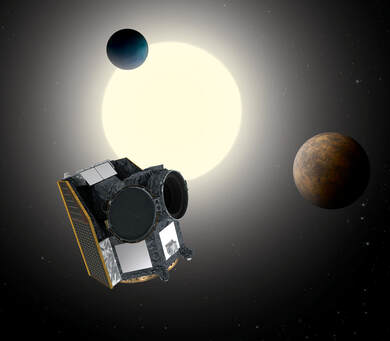
PictureCHEOPS with eye open
Looking up at the night sky, it's hard not to wonder if there's intelligent life out there, somewhere, anywhere. Secondarily, you might wonder if those intelligent beings built civilizations that still exist today or if their great works came to naught due to calamities such as asteroid strike, nuclear war, plague, or climate change. It could happen to us; did it happen to them?

Enrico Fermi, leader of the team that created the world's first nuclear reactor, used to throw cold water on his colleagues' ET musings with this retort: Okay, then, where are they? Seriously, if the heavens are so dense with life, how come no one's stopped by for tea? Fermi, I think, was a bit of a nudge, but his question certainly focuses the mind. One of many responses to the Fermi Paradox is that outer-space aliens haven't visited because they simply couldn't develop far enough before meeting extinction from natural disasters or by their own collective hands. Again and again, promising civilizations failed to escape their "technological adolescence," in the words of the prophetic cosmologist Carl Sagan.  

Maybe, maybe not. Either way, we keep looking up. We keep wondering about new worlds. As of December, 2019, planet-hunting telescopes on Earth and in orbit have discovered approximately 4,500 exoplanets -- planets beyond our insignificant little solar system at the edge of the Milky Way Galaxy. Kepler, recently decommissioned, found thousands of planets. TESS, launched in 2018, is scouring nearby solar systems for rocky, Earth-like orbs. The latest addition to this armada is CHEOPS, sent up by the European Space Agency just ten days ago. CHEOPS stands for CHaracterising ExOPlanet Satellite and is also the name of the 26th Century B.C.E. Egyptian pharaoh who built the Great Pyramid of Giza. He'd approve of this project, I suspect.  
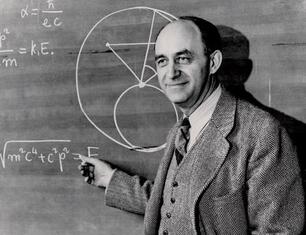
PictureDr. Enrico Fermi, brilliant nudge
​Primarily a follow-up mission of known exoplanets orbiting bright stars, CHEOPS is concentrating on 400-500 targets between the size of Earth and Neptune, also known as Super Earths. The powerful photometer aboard the satellite measures tiny changes in light when a planet transits its host star. From that scientists can calculate the planet's diameter. Combine the diameter with data from ground-bound telescopes and, voila, we have the planet's density and, perhaps, tempting clues to the planet's structure and atmosphere. Very cool, indeed. With the next generation of planet-exploring craft -- PLATO, AERIAL, WFirst and the James Webb Telescope, all slated for launch in the 2020s -- we might even be able to discern a planet enshrouded in carbon dioxide. Very hot, indeed.   

Time for a quick thought experiment, a twist on Dr. Fermi's question.  Let's say a spaceship full of beings from one of those exoplanets wreathed in carbon emissions makes its way to Earth. It lands on The Mall in WDC and meets with President Buttigieg. They're the last of their kind, they tell us through their Translatron 9000s. They industrialized too quickly and lacked the maturity to get off fossil fuels in time. Climate change didn't directly cause the near extinction of their species, but it was a main trigger for the wars that did. So, they urge us, learn from our story. Stop what you're doing now. Don't be another intelligent species gone down this sad cosmic road.

Would their visit make a difference? Would we even believe it's real? 

1 Comment

The Good Old Days

12/23/2019

0 Comments

 
Picture
“We now know that it will be much more expensive to not act on climate than to take even the most aggressive action today,” writes David Wallace-Wells in his captivating/terrifying book on climate change, The Uninhabitable Earth. While this statement of fact may not impel people to break open their wallets in the present, what with Xmas shopping to finish and tuition bills to pay, it does put matters into stark perspective. Like it or not, global society is in the process of making a huge decision about the future. We can decide not to act boldly and let the chips fall where they may. Or we can rise to the occasion and meet climate change with the urgency it requires. 

Global teamwork will be required, absolutely, but for the moment let's simplify things by just looking at the USA. Cynics like to assert that our nation can no longer come together in great national endeavors. We're too selfish, too partisan, too path dependent, too obsessed with comparatively minor issues. Okay, maybe, but it's instructive to look back and take note of when we have accomplished great deeds as a country. We won WW II, transforming ourselves into a military colossus within just a few years. After the war, we resuscitated Europe with the Marshal Plan (for a tidy $100 billion in 2018 dollars). We built an amazing interstate highway system from the Florida Keys to the Puget Sound, from San Diego to the potato fields of Caribou, Maine. Then we put men on the moon -- take that, Sputnik! And then, well, since then we haven't thought so big.  

Permit me, please, to go back a bit further to another feat of great national engineering. In the 1930s, FDR's Rural Electrification Administration brought electricity to rural America -- a vast, if forgotten, public works achievement that transformed life for millions and enabled the prosperity of the 1940s and '50s. The REA existed on the cutting edge of technology, using a 7200 volt distribution network that allowed lines to run up to 40 miles without significant voltage drop. REA crews traveled our vast land, stringing electrical lines, wiring houses and barns, and even putting light fixtures over people's kitchen tables. 

I was reminded of this epic feat last night as I watched The Homecoming: A Christmas Story, the 1971 TV movie that birthed the popular TV series The Waltons. Specifically, I refer to the scene in which John-Boy Walton turns on the Christmas tree lights. Electricity had come to the rural Blue Ridge Mountains of Virginia, allowing this family to illuminate its Xmas tree, buy labor saving devices and listen to news, weather and comedy shows such as Fibber McGee and Molly on the upright RCA radio stationed, like a magic portal, in the living room. 

Picture
We strung fat lights like that on my family's Christmas tree, in suburban Connecticut in the 1960s and '70s. I remember my oldest brother standing on a ladder, stringing them, and perhaps he announced, just like John-Boy did, that every light had to be in working order or nothing would happen. (Maybe there's a metaphor there for the fate of a nation.) When John-Boy plugged in the lights, his little brothers and sisters cheered as if a miracle had occurred. I like to think I got excited, too. 

Now it's almost 2020. Why not establish an SEA -- Solar Electrification Administration? Why not use loans, grants and every conceivable financial tool to bring solar power to the roofs and yards of homes and business across the USA? Why not employ SEA crews to roam the nation, hooking our grid to the sun and greatly lessening our dependence on fossil fuels? (Here I'll play Grinch and add that fossil fuels not only drive climate change but kill over 100,000 Americans every year through their inherent toxicity. So cutting them out would be a magnificent two-fer.)

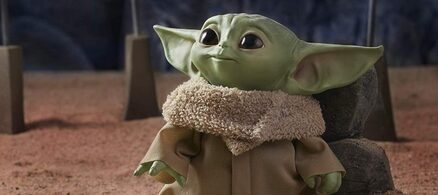
Why not, indeed, come together as a nation to counter climate change? Yes, there are many, many reasons why it may not happen, soon enough or at all. But wouldn't it be something if in addition to fruit cakes, tube socks and Baby Yodas we decided to give ourselves and our children a truly precious gift for Christmas? Thanks, Mom and Dad, for the healthy, sustainable future!

0 Comments

A Wine Cave for the Apocalypse

12/20/2019

0 Comments

 
Picture
At last night's Democratic debate in Los Angeles, presidential aspirant Elizabeth Warren lambasted co-aspirant Pete Buttigieg for attending a fundraiser in a fancy-dancy wine cave in Napa Valley. (You can't make this stuff up.) They went back and forth like Rock 'Em Sock 'Em Robots and who won is grist for the pundit mill; Mother Jones nicely captures the gestalt of their exchange. The Lizzie-Pete Dust-Up in the Desert (L.A. used to be a desert and may soon return to its natural state) got me thinking about rich folks and, of course, climate change...and wine caves. 

What the heck is a wine cave? Is it a cave sculpted by the drip, drip, drip of all the wine spilled, splashed and spit into the Napa Valley dirt? Has the Gallo Refinery sprung a leak? And if you licked the tip of a stalactite hanging from a wine cave's ceiling, would it present earthy notes of blackberry, leather, licorice, chamomile and Marion's lemon-meringue pie? Actually, an enormous chandelier with 1,500 Swarovski crystals hangs in the wine cave frequented by Humble Mayor Pete. But don't lick those! Swarovski crystals are  very expensive shards of man-made lead glass. ​

Picture
Questions, so many question. If (when?) the climate change-induced Apocalypse occurs, will the billionaires and their multi-millionaire lackeys retreat to the wine caves? If so, how will the One Percent of the One Percent power said caves? Perhaps with geothermal energy sequestered from the ravening bands of commoners roaming the surface world? Too grim? Then let's ask a more pertinent question: how can we at least motivate wealthy people to power their present day wine caves (and second homes and yachts and sports cars and robot butlers and pied-a-terres, gotta have a pied-a terre) with renewable energy sources?

It's not cost, of course. Slapping solar panels on the roof is a trivial expense for the rich. But other than adding a Tesla or two to their vehicle fleet, most "people of means" just can't be bothered. Well, there's always the moral approach, the appeal to intergenerational responsibility...all right, come on, stop laughing. What about this? Maybe the secret to changing the dirty, fossil-fuel burning ways of the ultra-rich is to inconvenience them. Man, they hate that! Waiting in lines, being put on hold. Not being sufficiently sucked up to. Having to walk to the wine cave, then arriving late and missing the kale-encrusted sea bass sliders washed down with a $900 bottle of Pouilly-Fuisse. That's life for most of us; it's agony for the extremely well-heeled.

This dynamic played out during the recent outbreak of wildfires in California. To prevent blazes caused by sparking from powerlines, PG&E instituted precautionary power outages to various communities irrespective of their income levels. Hence, people in some of the richest enclaves found themselves without electricity, and without a say in the matter! Within days -- as outraged Masters and Mistresses of the Universe sat in the dark, as the most delicate vintages suffered without the coddling of their wine fridges -- orders for solar panels and battery units shot up in WealthyTown. 

Simply put, we must inconvenience them into doing the right thing.  A future blog will further explore how to go green by goosing the rich.     

0 Comments

Good Meetings, Bad Meetings

12/15/2019

0 Comments

 
Picture
Most meetings kind of suck. They suck less when there are cookies. I prefer big chocolate-chip cookies, the chips like tasty depth charges, washed down with a nice Cabernet Sauvignon.   

​However, cookies and wine aside, if you have to attend yet another meeting featuring the endless droning of your beloved colleagues or townsfolk, it's fun to at least pretend to get something done. For instance, why not make a widely ambitious, voluntary pledge, even if said pledge is lacking in concrete prospects. Good intentions count, right? People can be inspired to change their ways. And visionary pledging sure beats lounging in lassitude as everyone agrees to kick the crucial decisions, can-like, down the road. 

Such idealistic meetings, surely, produced the recent pledge by the European Union to go climate neutral by 2050. Bam, all of it, energy, transportation, farm animals -- all greenhouse emissions to yield no net impact on the climate. Twenty-six countries are on board, while Poland pouts in the corner (We want to burn coal! We want more money if we can't!) and the U.K. goes Brexit, stage right. That's about 550 million people, not counting the Brits. Impressively, the E.U. allows for little procrastination, requiring itself to get halfway there by 2030. Well, "requiring" may be a little strong, since there's no penalty for failure in this agreement. Let's say strongly suggesting...at any rate, you'll be shunned and served weak tea at the biannual shindig in Brussels if you don't at least try.      

Picture
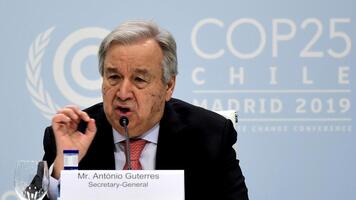
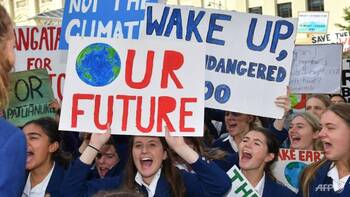
Back to meetings that truly suck -- such as the recent United Nations conference on climate change that concluded a few days ago in Madrid. Well, "concluded" may be a little strong, since nothing apparently happened. Let's say it fizzled or ground to a halt in a spasm of self-recrimination and selfishness as youth protesters hollered bloody murder outside the halls. UN Secretary-General Antonio Guterres, like a dad surveying junior's abysmal report card, tweeted that he was "disappointed." Then, silently, he returned to his newspaper. And now, drum-roll, for the award ceremonies. Gold, silver, bronze and platinum medals for obstructing progress at even making a wildly ambitious, voluntary pledge: USA, Brazil, China and India! These countries just happen to be the world's major greenhouse gas emitters. 

But rest assured, said the representatives of the world's leaders,* we're reconvening next year. That meeting in Glasgow, Scotland will be COP-26, for the 26th annual meeting of the Conference of Parties as directed by the Intergovernmental Negotiation Committee for a Framework Convention on Climate Change (INCFCCC). Let's hope that COP-26, unlike COP-25, will not be another COP-out. 

Bad puns for bad meetings. As for the cookies at COP-25, they were vegan so...yeah.    

*"Leaders" may be a little strong. Let's say flawed human beings like you and me who have risen beyond their level of expertise, or maybe timid toadies of the status quo, or rapacious exploiters of...  

0 Comments

The Third (Green) Article of Impeachment

12/13/2019

0 Comments

 
Picture
ARTICLE III: DESECRATION OF GENERATIONAL DUTY

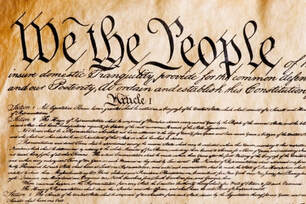
The Constitution provides that the House of Representatives “shall have the sole Power of Impeachment” and that the President “shall be removed from Office on Impeachment for, and Conviction of, Treason, Bribery, or other high Crimes and Misdemeanors.” In his conduct of the Office of President of the United States, Donald J. Trump has repeatedly and without remorse committed the treasonous high crime of injuring the health and welfare of American children, now and in the future, by grievously ignoring and wantonly exacerbating the unprecedented and existential crisis of climate change. The right to a climate system capable of sustaining human life is fundamental to a free and thriving society. The president's actions have undermined affirmative measures to address climate change and, therefore, have violated the youngest generation's rights to life, liberty and property that are enshrined in the Constitution and entrusted to a President as an inviolable and sacred duty.  

Picture
President Trump engaged in this scheme or course of conduct through the following means:

1) In contravention of overwhelming scientific consensus, the President denied the existence of the material threat posed by climate change, casting doubt on scientific experts and portraying climate change as a "hoax" perpetrated by China and other malevolent actors. Concurrently, for his private benefit, the President accepted millions in political contributions from fossil-fuel burning industries responsible for emitting greenhouse gases that are the principal cause of the crisis. Together these actions have served to obfuscate truth, discredit the office of the presidency, and dangerously delay the required national response to climate change. 

2) In defiance of the international community, the President issued notice to withdraw the United States from the Paris Agreements, a treaty signed by 197 countries as the principal global mechanism for coordinating and strengthening efforts to address the climate crisis. This historic forfeiture of leadership failed to serve the interests of the United States or the world at large and constituted an extreme betrayal of the President's duty to protect our country in emergencies and to preserve conditions essential to the present and future thriving of the citizenry.    

3) Through cabinet agencies and Executive Actions, the President aggressively moved, in hundreds of instances, to cancel and diminish regulations that mitigate climate change and its consequences. Examples included the suspension of mileage standards related to vehicles, the weakening of rules regarding methane leakage at oil and gas facilities, and the transfer of protected federal lands to private industrial interests. In addition, the President increased financial subsidies to corporations which, through the extraction and burning of fossil fuels, accelerate climate change and greatly multiply its current and future costs. 

In sum: by failing to safeguard the constitutionally protected rights of young people to an atmospheric system that allows for the free, untrammeled enjoyment of liberty and the pursuit of prosperity, by betraying the intergenerational contract explicitly determined in the Constitution, and by continuing this train of abuses without respite or regret, thereby causing to burden the next generation of leaders with a global crisis potentially beyond effective remediation, the President has henceforth assumed to himself functions and judgments necessary to the exercise of the “sole Power of Impeachment” vested by the Constitution in the House of Representative.    

0 Comments

Tap, Tap, Tap

12/9/2019

0 Comments

 
Picture
Last week, at the university where I work as an instructor, I attended a research rumble on the topic of sustainable energy. Put on by Boston University's Institute for Sustainable Energy, it came with this balky title: "Accelerating the Energy Transition: Transformative Pathways to Decarbonization and Sustainability." For academics, actually, that's pretty jazzy. So the room was packed with about 150 folks -- roughly half bore that "Where's the free pizza?" expression common to grad students -- and the event proceeded with nary a tech-glitch. Ten researchers got 3.5 minutes each to slap up a couple of slides and yak about their work, and then everyone shuffled to the lobby for wine, beer and an impressive buffet from which I scarfed orange cantaloupe and mini egg rolls. This method of rapid-fire presentation, followed by a leisurely graze and gulp, is called "Research on Tap."  

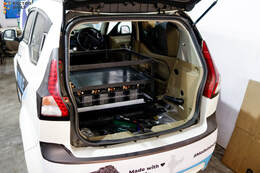
PicturePrototype of metal-air battery
One researcher was hell-bent on getting the feds to measure methane leaks with sensors on low-flying aircraft rather than making some poor sod walk around the fracking works with a wand and gauge. Another said we need more public charging infrastructure for electric vehicles, and boy did he have the graphs to prove it. A researcher named Emily Ryan -- three of the ten presenters were women -- spoke very quickly about the interfacial stability in high-energy-density batteries. Upshot: we're maxing out the capabilities of lithium-ion batteries and may need to transition to metal-air varieties. Cutler J. Cleveland, who goes as Cleveland J. Cutler in his side-career as a hip-hop DJ, told us how he's sort of in charge of decarbonizing all 86,000 thousand buildings in Boston by 2050. Good luck with that, CJC, and, yes, I'm kidding about the DJ thing. "The usual complaint," said a fellow researcher, "is that if we close the coal plant we'll destroy the community." But it doesn't have to go down that way, and he put up a chart delineating the complex interactions between a couple dozen stakeholders. It was shaped like my living-room ceiling fan.

And so on, and so forth. Fun, in a nerdy way. 

Picture
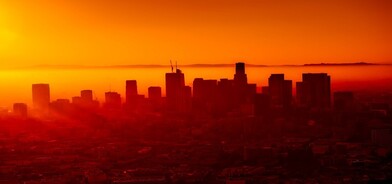
I was intrigued, especially, by Jon Levy's research on the public health consequences of the transition to green energy. One of his slides noted that the incidence of SIDS -- sudden infant death syndrome -- can be higher within urban heat islands. These are "hot spots" in cities, generally paved over and unshaded by tree cover, typically in low-income areas. Urban heat islands, of course, are exacerbated by the scorching temperatures resulting from climate change And low-income areas are often left behind as cities green-up in response. So, do we actually have a meaningful link between climate change and babies mysteriously dying in their cribs? I can see one of my writing students going to town on that premise and, in her activist ardor, exaggerating the dynamic.

After the last  presentation, not far from the mini egg rolls, I asked John Levy about the SIDS-climate change connection. Is it causation or correlation? And isn't SIDS mostly about infants that tragically incur blocked airways when they sleep on their stomachs? Levy acknowledged that public health epidemiology is hard, but insisted that studies have teased out variables such as sleeping position and found a link between the adverse conditions of urban heat islands and SIDS. A key contributing factor: people living in urban heat islands often have inadequate air conditioning to beat the heat. So, I wonder, perhaps more AC could reduce the incidence of SIDS. And, ironically, contribute to climate change if those AC units are powered by fossil fuels. Oh my, it's never easy.

Way to go, BU, for tackling these crucial issues. And pouring out your research, on tap.        

0 Comments

Just Weather

12/3/2019

0 Comments

 
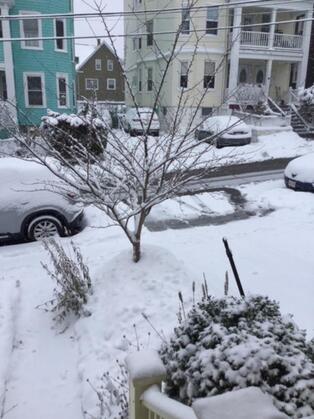
PictureThe great storm, out my front door
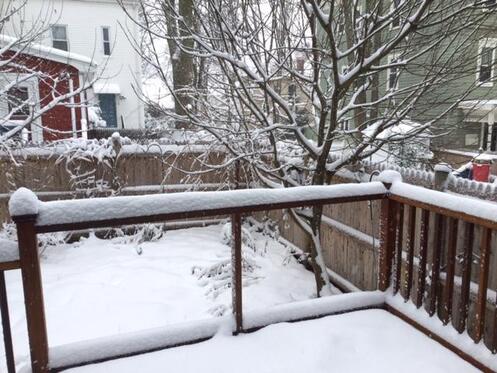
Last night, not five feet inside the front door, her coat flecked with snow, my usually imperturbable wife exclaimed, "They're predicting eight inches!" Elahna stamped her black boots on the grubby little throw rug that I've been meaning to replace, but it's not that bad. "Three to eight inches," I returned, "and who's 'they'?" She replied, "The people in the radio." Ah, the Radio People. The Acu-Weather Doppler-Radar Know-It-Alls, the Storm-Team-Seven Super Alarmists. Probably the same people who decided to color the pages on my Weather Channel App in Run-to-the-Root Cellar-Red just because a few flurries are floating down. (The Weather Channel App, by the way, boasts that it's "Powered by Watson," the smarty-pants computer who beat Ken Jennings on Jeopardy by cheating the answer buzz-in protocol. Just saying.) Yes, the same panicky folks who cowed officials in our town to cancel school today over said fluffy three-to-eight inches. A neighbor walking his dog claims it's because of the buses, somehow the buses don't like snow. His dog, the beautiful Saphira, sat happily in a little snow drift as we codgers chatted about the old days when we walked to school in blizzards, uphill both ways. 

Picture
Viscerally, I get annoyed at the media hysteria over normal weather. I actually like the varieties of New England weather, snow storms and hot summer days alike. There's nothing like a big-whopper wind nudging leaves off a tree in autumn or a cleansing, springtime thunderstorm sending gushers of water down our slanted street. I sit on my porch, watch it unfurl. And if you don't like our seasonal variations, well, that's just another reason to move to Florida, isn't it? Goodbye, and don't let the door hit you on the...on the other hand, from the perspective of a climate-change agonizer, maybe all this weather agitation stoked by media outlets hungry for ratings and clicks isn't such a bad thing after all.​

Picture
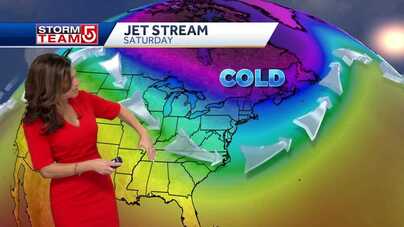
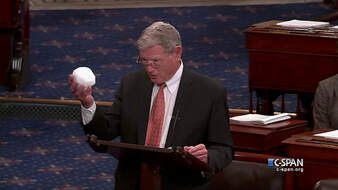
Climate change is putting extreme weather events on steroids. Hurricanes are bigger, rainstorms deliver more rain, heat waves spike higher and for longer duration. So maybe -- stick with me here -- if the weather-climate change connection becomes cemented in people's minds, and then folks incorrectly and hysterically start blaming normal weather events (a bit of snow, for instance) on climate change, well, that might raise public awareness of climate change's many threats. I mean, good things can happen for stupid reasons, right? Also, it seems like payback for that politician from Oklahoma who stood on the floor of the U.S. Senate brandishing a snowball as evidence of the pernicious conspiracy that is climate change. ​

Just a thought. That's it for today. Now I'm gonna shut this computer down, bundle up and go outside to take a walk in the soft, sweetly falling three-to-eight inches of snow. 
Picture
0 Comments

    Author

    Hal LaCroix has been a newspaper reporter, magazine editor, PR professional, book author, environmental advocate and college instructor, among other endeavors. He lives in Somerville, Mass. with his wife Elahna. 

    Archives

    February 2026
    January 2024
    October 2023
    April 2023
    March 2023
    January 2023
    December 2022
    November 2021
    August 2021
    June 2021
    May 2021
    April 2021
    September 2020
    August 2020
    February 2020
    January 2020
    December 2019
    November 2019
    October 2019
    September 2019

    Categories

    All

    RSS Feed

Proudly powered by Weebly